Is It Illegal to Throw Electronics in the Bin in Dubai? Laws, Risks & Safe Drop-Offs
Federal waste laws and municipal codes prohibit electronics in general refuse. Why lithium batteries ignite in compactors, data leakage risks, and certified recycling channels.
Discarding electrical and electronic equipment in general household waste bins is illegal under UAE Federal Law No. 12 of 2018 on Integrated Waste Management and Dubai Municipality guidelines.
Lithium-ion batteries in phones, laptops, and cordless tools pose severe thermal runaway risks; when crushed inside municipal compactor trucks during summer heat (45°C+), they frequently cause vehicle fires.
Toxic components including lead, cadmium, mercury, and brominated flame retardants leach into groundwater and soil if dumped in municipal landfills.
Tossing storage devices (hard drives, solid-state drives, smartphones) into general waste leaves confidential personal and banking data vulnerable to physical harvesting.
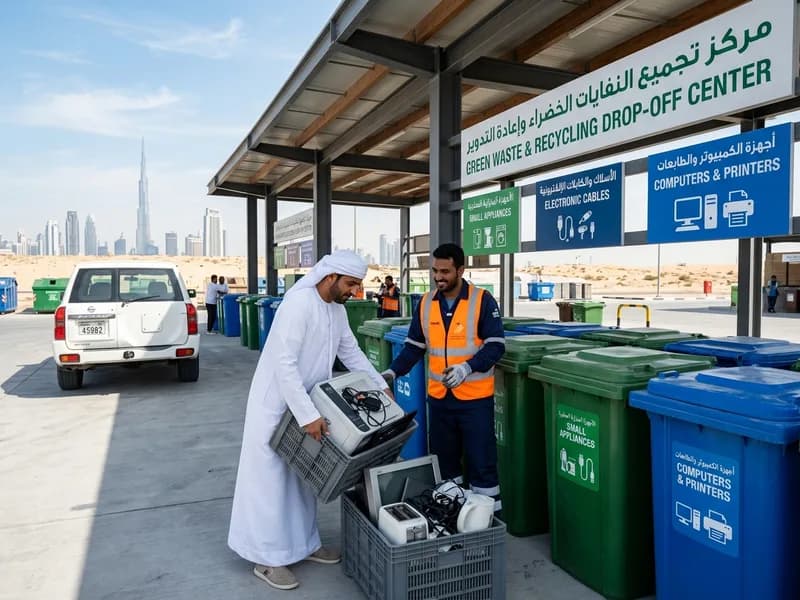
Safe disposal routes include municipal green drop-off bins at designated shopping centers and parks, retail take-back programs, and certified e-waste removal specialists who provide data destruction.
Is it illegal to put electronics in general household trash in Dubai?
Yes, it is strictly illegal to dispose of electrical appliances and electronic equipment (e-waste) in ordinary household garbage bins, chutes, or municipal skips in Dubai. The regulatory framework is established at both the national and municipal levels to safeguard public safety and prevent environmental contamination.
Under UAE Federal Law No. 12 of 2018 on Integrated Waste Management, all waste generators—including residential households, commercial offices, and industrial facilities—are mandated to segregate hazardous, electronic, and recyclable waste at source. Dubai Municipality's Waste Management Department classifies electronics as regulated special waste that must never enter the municipal solid waste stream headed for general landfills.
The compactor truck fire hazard: why lithium-ion batteries are dangerous
The most urgent reason municipal authorities enforce strict bans on electronics in general bins is the catastrophic fire risk posed by lithium-ion and lithium-polymer batteries. Nearly every modern gadget—from smartphones, tablets, and wireless earbuds to vape devices, power banks, and cordless vacuum cleaners—contains a high-energy-density rechargeable battery.
When garbage bags are tossed into a standard rear-loading compactor truck, hydraulic steel blades exert immense pressure (thousands of pounds per square inch) to compress the load. If a lithium battery is punctured, bent, or crushed inside the compactor, an internal short circuit triggers immediate thermal runaway. In Dubai's extreme summer climate, where ambient temperatures frequently reach 45°C to 50°C and truck hoppers become scorching ovens, punctured batteries ignite instantly.
Compactor truck fires are dangerous emergencies. Drivers must quickly dump blazing waste onto the highway or emergency shoulder to save the multimillion-dirham vehicle, blocking traffic and putting sanitation workers at grave risk. Discarding a single old phone or vape into your building chute can spark a fire in the compactor room before the truck even arrives.
Thermal runaway in Dubai summer
Never discard lithium-powered electronics in ordinary waste bins. Ambient summer heat combined with hydraulic compactor crushing causes instant battery ignition, creating hazardous chemical fires inside municipal collection vehicles.
The environmental impact of electronics in desert landfills
Beyond fire hazards, consumer electronics contain an array of persistent toxic chemicals and heavy metals. Standard printed circuit boards (PCBs), cathode ray tubes (CRTs), and semiconductor chips contain lead solder, mercury vapor switches, cadmium coatings, and brominated flame retardants (BFRs).
When e-waste is buried in landfills, extreme desert heat and occasional heavy seasonal rains accelerate the breakdown of casings, causing heavy metals to leach into surrounding soil and sub-surface aquifers. As part of the UAE Net Zero 2050 Strategic Initiative and the Circular Economy Policy, Dubai is aggressively diverting e-waste away from landfills and into specialized material recovery facilities that extract valuable rare-earth elements, copper, gold, and engineering-grade polymers.
Common electronics, hazards, and approved recovery channels
Data security: what happens when you throw a hard drive into a dumpster
Another critical danger of improper electronics disposal is identity theft and corporate data exposure. Many residents assume that dragging files to the 'Trash' folder or performing a basic factory reset completely sanitizes a laptop, desktop computer, or smartphone. In reality, standard operating system formatting merely removes directory pointers while leaving the underlying binary data intact on magnetic platters or flash NAND cells.
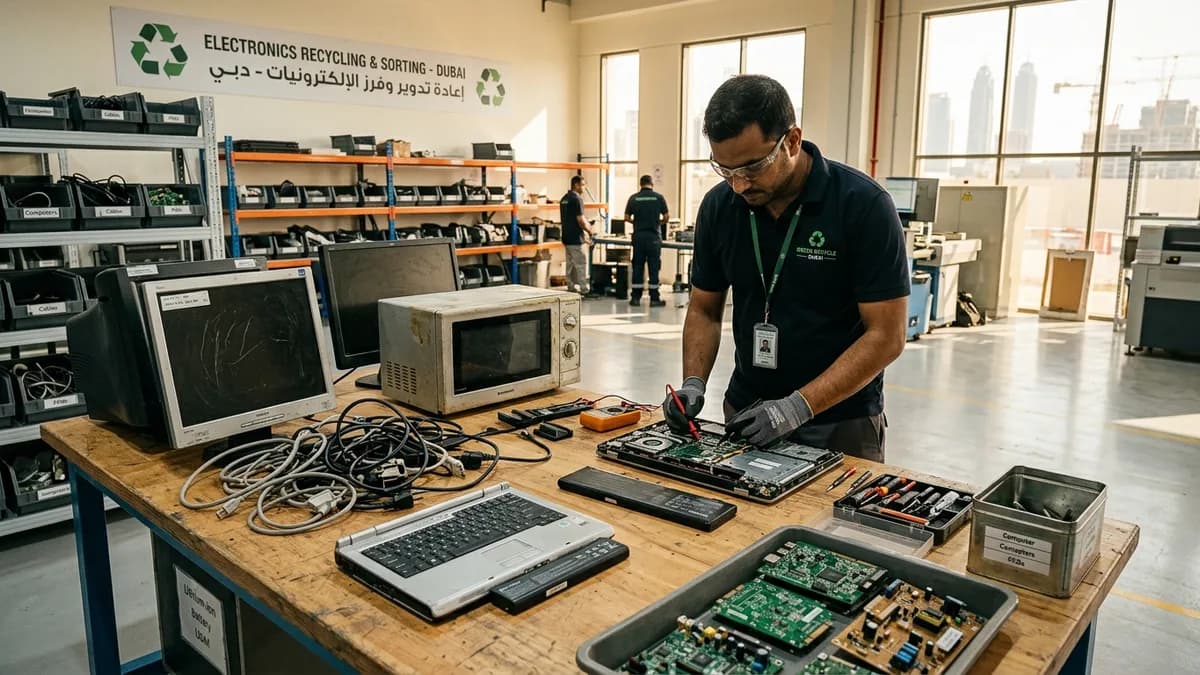
When obsolete computers, external hard drives, or network servers are dumped into building garbage rooms, they become easy targets for scavengers. Specialized data recovery software can retrieve personal photos, passport scans, tax records, and saved banking credentials from an unencrypted discarded drive in minutes. Certified e-waste handlers perform cryptographic multi-pass wiping (such as DoD 5220.22-M standards) or mechanical degaussing and hydraulic shearing, issuing formal destruction certificates for complete security.
Authorized drop-off stations and dedicated collection services ensure e-waste is channeled into certified dismantling rather than landfill.
Where can you legally dispose of e-waste in Dubai?
Dubai provides multiple convenient, legal routes to ensure obsolete electronics are recycled responsibly without risking municipal fines:
1. Dubai Municipality Smart Sustainability Oasis Centres: Located at convenient community hubs across the city (including Al Barsha 2, Al Twar, Umm Suqeim, and Hatta), these solar-powered recycling stations feature dedicated deposit slots for small electronic devices, cables, and household batteries.
2. Retailer Take-Back Programs: Major consumer electronics retailers, including Sharaf DG, Virgin Megastore, and Apple Stores, host branded e-waste drop-off bins in select shopping malls. They accept old phones, tablets, cables, and small electronics regardless of brand or condition.
3. On-Demand Bulky Junk & E-Waste Removal: If you have bulky items like large flat-screen TVs, desktop computer towers, home theater sound systems, or office server racks, taking them to a mall drop box is impractical. A licensed junk removal service collects items directly from your home or commercial premises, providing safe transport to authorized recovery centers.
How to prepare your electronics for pickup or drop-off
Before handing over old gadgets for recycling or professional haulage, follow this simple five-point preparation checklist:
1. Back Up Essential Data: Copy family photos, legal documents, and personal files to secure cloud storage or an encrypted external drive.
2. Log Out & De-link Accounts: Sign out of iCloud, Google Account, Microsoft, and banking apps. De-link the device from two-factor authentication keys.
3. Perform Full Factory Encryption & Reset: On smartphones and tablets, encrypt the storage first (if supported) before executing a full factory reset.
4. Remove Storage Media & SIM Cards: Check card trays for microSD cards and physical SIM cards. On desktop PCs, remove the hard drive if you prefer to destroy it manually.
5. Bundle Peripheral Accessories: Gather power bricks, charging cables, and remotes in a small bag alongside the device. Keeping accessories together streamlines sorting at the recycling depot.
What happens if I get caught throwing electronics in a Dubai apartment bin?
You face municipal fines under UAE waste legislation starting at AED 500. Building security teams also monitor chute and bin areas via CCTV, issuing community violation charges directly to your tenancy account.
Can I put small cables, chargers, and batteries in the regular trash?
No. Cables contain recyclable copper and PVC that should not be landfilled, while loose household batteries can cause chemical leakage and compactor fires. Drop them in dedicated e-waste bins at supermarkets or malls.
Where is the nearest electronics recycling drop-off station in Dubai?
Dubai Municipality operates Smart Sustainability Oasis stations in multiple locations, including Al Barsha 2 Park, Al Twar, and Karama. Major electronics stores in Dubai Mall, Mall of the Emirates, and City Centre malls also host collection bins.
How do I ensure my private data is deleted before discarding a computer?
Perform a secure drive wipe using multi-pass overwriting software (such as DBAN or built-in secure erase tools) rather than a simple format. For complete assurance, have the hard drive physically removed and shredded.
Does Dubai Junk Collection handle bulky electronic waste and old IT gear?
Yes. We collect heavy office servers, desktop monitors, printers, flat-screen TVs, and kitchen appliances directly from your doorstep, ensuring safe handling and certified transfer to authorized recycling partners.
Planning a clearance in Dubai?
Send photos of what you need cleared on WhatsApp. Our team provides an instant, fixed upfront rate and handles elevator bookings and gate security smoothly.
Tags:#Is It Illegal to Throw Electronics in the Bin Dubai#Data Safe Electronics Disposal Dubai#E-Waste Recycling Centres Dubai#Electronic Waste Disposal Dubai#Hazardous Waste Dubai
Dubai Junk Collection Editorial Team
Operations & Pricing Specialists
Specialists in residential and commercial clearances across Dubai since 2016. Committed to safe property handovers, compliant electronic waste disposal, and municipal green waste diversion.
 Ask a Question