How to Get Rid of an Old AC Unit & Water Heater in Dubai
Air conditioners and water heaters are the two appliances you cannot simply unplug and carry out. Both are usually fixtures, both need a technician before a truck, and both cause expensive damage when that order gets reversed.
In most Dubai tenancies the air conditioner and the water heater belong to the property, not to you, so written landlord or owners association approval comes before any removal is arranged.
A split air conditioner holds refrigerant under pressure and has to be pumped down by a qualified technician before the pipework is cut, which is a separate visit from the collection itself.
A water heater sitting in the ceiling void above a bathroom is the single most common source of avoidable move-out damage, and the fix is simply draining it and letting it cool before anyone lifts it.
The copper inside outdoor condensers and heater elements is what attracts informal collectors who cut lines on site, vent the gas, and leave the shell behind, which is a dumping offence traced back to your address.
Book the technician and the collection for the same morning so the unit is not left loose, live, or half dismantled overnight in a common area.
How to get rid of an old AC unit in Dubai
To get rid of an old AC unit in Dubai, first confirm in writing that you are allowed to remove it, then have a qualified air conditioning technician recover the refrigerant and disconnect the indoor and outdoor units. Only after that is it a collection job for a licensed removal crew or a scrap metal recycler.
The same order applies to a water heater: isolate the power, close the supply, drain the cylinder, let it cool, then remove. Skipping straight to the removal step is what turns a routine job into a ceiling repair or a refrigerant leak.
Check who actually owns the unit before you touch it
This is the step people skip, and it is the one that costs money. Across most Dubai apartments and villas, the air conditioning system and the water heater are landlord fixtures listed in the tenancy contract, in the same category as built-in wardrobes and kitchen units. Removing one because it is old, noisy, or inefficient can be read as removing part of the property.
If your unit has failed and you want it replaced, the request goes to the landlord or the property manager, and the replacement is usually theirs to arrange. If you are the owner, or you installed a unit yourself and have the paperwork to show it, the decision is yours, but a building or community with an owners association will still expect notice before anything is carried through common areas or worked on at a facade.
Villas are simpler on ownership and harder on access. Roof-mounted units, ducted systems above a false ceiling, and condensers behind a service wall each need their own plan for getting the unit out, and that plan should exist before anyone books a truck.
Never remove a landlord fixture during a move-out
A missing AC unit or water heater at inspection is treated as a deduction, not a disagreement, and the amount is decided by the landlord getting a replacement quoted. If a unit genuinely has to go, get the approval in an email you can forward later.
Why an air conditioner cannot just be unbolted
A window unit is a sealed box you can lift out once it is unfastened. A split system is not. It is two units joined by insulated copper lines carrying refrigerant under pressure, and that gas has to be pumped down into the condenser or recovered into a cylinder before anything is cut.
A technician does this in minutes with the right gauges. Someone with a hacksaw releases the refrigerant into the air, which is both an environmental problem and the reason a unit that might have been resold or reused is now scrap. It also makes a mess of the wall penetration, and repairing that is on you at handover.
Ducted and central systems add another layer, because the indoor coil sits above a ceiling and the drain line ties into the building. Those are dismantled section by section, and the access panels usually have to be reinstated afterwards.
What each type of unit needs before it can be collected
Unit type
Who disconnects it
The part that slows the job down
Split system (wall unit plus outdoor condenser)
AC technician: pump down, disconnect lines, isolate power
Condenser access on a balcony ledge, facade bracket, or roof
Window or through-wall unit
Electrician or competent handler; isolate at the breaker
Sleeve fixings seized with age; the opening needs sealing after
Ducted or central indoor coil
AC technician with building management notice
Ceiling access panels and drain line disconnection
Electric storage water heater
Plumber or technician: isolate power, close inlet, drain tank
Ceiling void hatch size and the wait for the water to cool
Portable or floor-standing AC
No technician needed for a self-contained unit
Weight and stairs if a lift is unavailable
Removing a water heater without flooding the ceiling
In most Dubai apartments the water heater is not in a cupboard. It sits in the ceiling void above the bathroom behind a small hatch, held on a bracket, full of water, directly above a tiled floor and a corridor. That geometry explains nearly every water heater job that goes wrong.
The preparation is unglamorous and takes about an hour of waiting, most of which is doing nothing while the tank cools.
Switch the heater off at the distribution board, not just at the wall switch, and label the breaker so nobody flips it back on mid-job.
Leave it several hours, or overnight, before anyone opens the tank. Stored water comes out hot enough to scald long after the power is off.
Close the inlet valve, then open a hot tap somewhere in the flat to break the vacuum. Without that step the tank drains slowly and unpredictably.
Drain through the outlet into a bucket or a hose run to the shower trap, and keep draining until it genuinely stops, not until it slows.
Lay sheeting on the bathroom floor and along the route out. A drained cylinder still holds residue, and the last of it always finds a carpet.
Have two people on the lift down from the hatch. A steel cylinder is awkward rather than heavy once empty, and it is dropped far more often than it is carried.
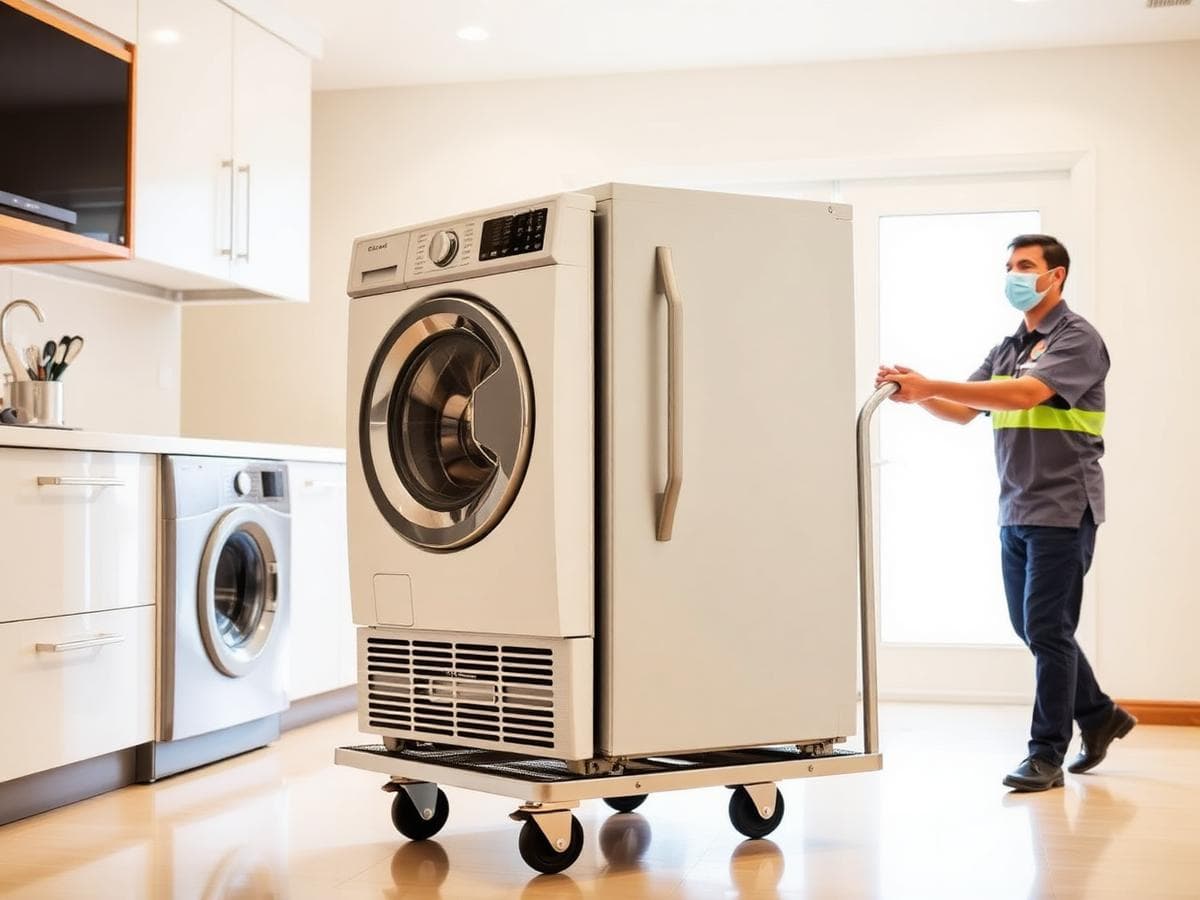
Once the technician has disconnected the unit, the collection itself is a straightforward trolley and lift job.
The copper problem, and why it matters to you
Outdoor condensers, coils, and immersion elements contain copper, and copper has a scrap price. That is the reason an old outdoor unit sitting in a service yard tends to disappear, and the reason people offer to take it away at no charge without asking who you are.
The problem is what happens next. An informal collector strips the copper on the spot, vents whatever refrigerant is still in the circuit, and abandons the shell, the fan housing, and the mounting bracket somewhere convenient. The dumping report goes back to the last address associated with the unit, which is yours.
A licensed route does the same recovery, in the correct order, at a facility set up for it. The steel casing, aluminium fins, copper, and motor windings all get separated and sold on as material. Very little of a stripped air conditioner or water heater genuinely has to reach a landfill, which is the whole point of responsible appliance disposal in Dubai rather than a quiet arrangement in a car park.
Timing the job around a Dubai summer
Air conditioning work in Dubai is seasonal in a way that catches people out. From late spring through September, technicians are running breakdown calls, and a planned removal sits behind every emergency. Booking a disconnection for the same week you need it, in August, rarely works.
There is a practical consequence for anyone timing this against a tenancy. If your unit is being replaced before a handover, start the conversation with the landlord weeks ahead rather than days. If you are clearing a property completely, put the technician visit in the morning and the collection in the afternoon of the same day, so nothing sits disconnected in a corridor or on a landing overnight where building management will find it.
One visit, two trades
Tell us at the quote stage that a unit still needs disconnecting. We can schedule the collection to land after the technician finishes rather than sending a crew to a unit that is still live, which is the most common reason an appliance pickup has to be repeated.
Booking an AC or water heater collection
Send photos on WhatsApp of the indoor unit, the outdoor unit, and the access route, and tell us the floor and whether a service lift is available. Condensers on balcony brackets, roof-mounted units, and heaters above a ceiling hatch all change the equipment we bring.
Our appliance collection service covers the removal, the carry, and the onward routing for degassing and metal recovery. If the unit still needs a technician, say so and we will time the visit around it rather than around a guess.
Frequently Asked Questions
Can I remove the air conditioner in my rented apartment myself?
Not without written approval. In most Dubai tenancies the AC is a landlord fixture, and removing it without permission is treated as damage to the property at inspection. If the unit has failed, report it and let the landlord arrange the replacement, which is usually their obligation under the contract.
Is there any money in an old AC unit or water heater?
Sometimes, but less than people expect. A recent unit in working order has resale value to a second-hand dealer. An old, corroded, or gas-leaking one is scrap, worth only its metal content, and any offer of cash for it usually reflects the copper rather than the appliance.
What happens to the refrigerant when a split AC is scrapped?
It is recovered into a cylinder by the technician before the lines are cut, then handled by a facility equipped for it. It is never released deliberately. That recovery is the main reason air conditioner disposal in Dubai runs through a technician first rather than starting with a removal crew.
How long should the water heater be switched off before removal?
Several hours at minimum, and overnight is better. The tank holds its heat long after the breaker is off, and a cylinder opened too early scalds whoever is holding it. Switching it off the evening before a morning collection is the simplest way to get this right.
Planning a clearance in Dubai?
Send photos of what you need cleared on WhatsApp. Our team provides an instant, fixed upfront rate and handles elevator bookings and gate security smoothly.
Tags:#How to Get Rid of Old AC Unit Dubai#Air Conditioner Disposal Dubai#Water Heater Removal Dubai#Refrigerant Recovery#Fixtures and Handover
Dubai Junk Collection Editorial Team
Operations & Pricing Specialists
Specialists in residential and commercial clearances across Dubai since 2016. Committed to safe property handovers, compliant electronic waste disposal, and municipal green waste diversion.
 Ask a Question