A fridge is legally different from other bulky waste because its sealed system holds refrigerant gas that has to be recovered by trained handlers, not released or punctured on site.
Preparation the day before decides whether collection succeeds: empty the unit, defrost it fully, contain meltwater, and secure loose shelves.
Scrap dealers across Dubai will happily take a working or repairable appliance, often for free, but lose interest in anything with a failed compressor, a cracked drum, or water damage.
Anything connected to gas, or a plumbed water heater, needs a qualified technician to disconnect rather than a removal crew or a resident.
Around three quarters of a typical white goods unit by weight is recoverable steel, aluminium, copper, and plastic, which is why responsible disposal routes them to sorting rather than landfill.
How to dispose of an old fridge in Dubai
To dispose of an old fridge in Dubai, arrange collection through Dubai Municipality bulky waste where your address qualifies, hand a working unit to a scrap or second-hand dealer, ask the retailer delivering your replacement to take the old one, or book a licensed removal company that sends the unit for refrigerant recovery and metal recycling.
What you cannot do is leave it in a bin room, in the parking basement, or beside a community skip. A fridge left in the open is both a dumping violation and, once its gas circuit is damaged by rough handling, an environmental one.
Why a fridge is not just another bulky item
Wardrobes and sofas are inert. A refrigerator, freezer, or air conditioning unit is a sealed pressurised system holding refrigerant gas and compressor oil, and those have to come out under controlled conditions before the shell is scrapped.
The UAE regulates the handling of these substances, and the practical consequence for a resident is simple: your fridge needs to reach a facility equipped to recover the gas. That rules out the informal option of letting someone drag it to an empty plot and strip the copper out of it, which vents the refrigerant straight into the air and leaves the carcass behind.
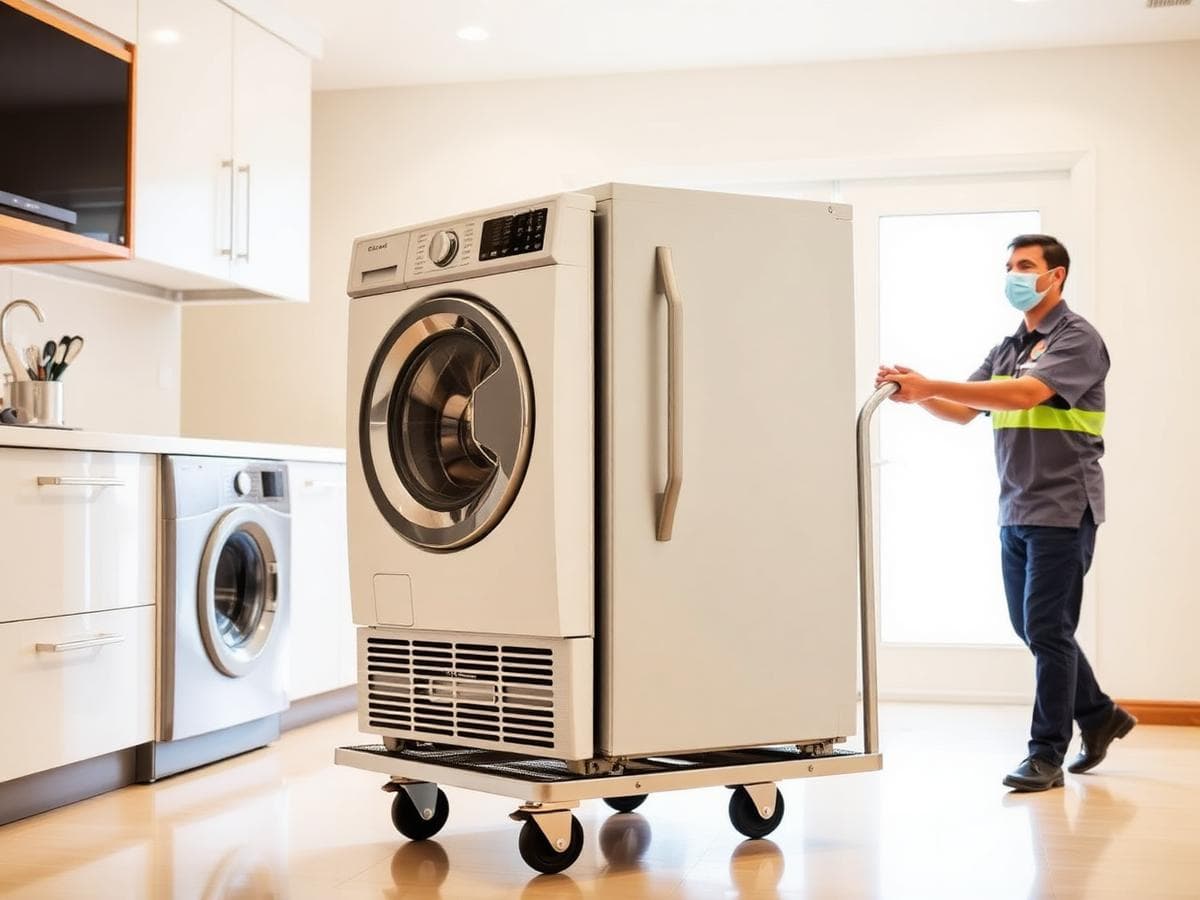
It also changes how the unit is carried. Fridges are designed to travel upright. Laid flat for a long trip, compressor oil migrates into the cooling lines, and a unit someone hoped to sell on as working arrives at the buyer dead.
Prepare the appliance the day before collection
More appliance pickups get delayed by preparation than by access. Half an hour the evening before is what stops a crew standing in your kitchen watching ice melt.
Ask the retailer before delivery day, not after
Many appliance retailers in the UAE will take your old unit away when they deliver the replacement, but it is arranged at the point of sale and loaded onto the delivery job sheet. Once the driver is at your door with a new fridge and no instruction, that option has gone.
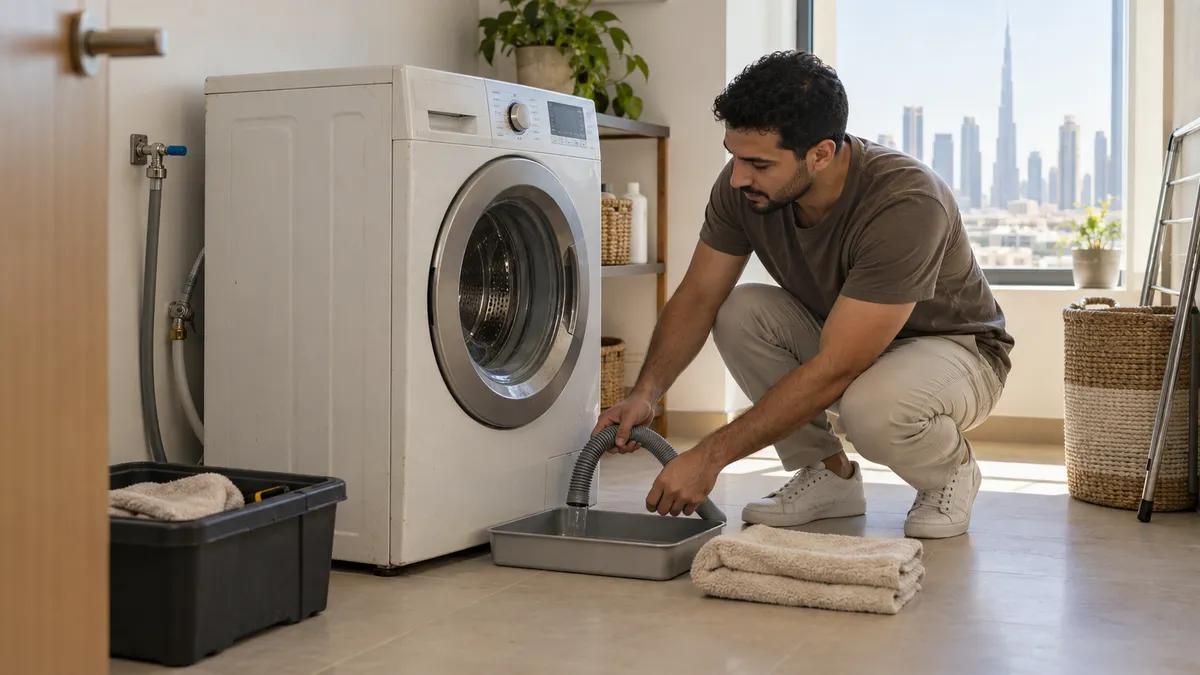
Fridges and freezers: empty and unplug at least 24 hours ahead, prop the doors open, and lay towels along the base. A freezer that looks defrosted at the front is usually still holding a solid block behind the drawers, and that water ends up across the floor and into the lift.
Transit bolts and loose parts: shelves, crisper drawers, and glass plates should be taped in place or removed and carried separately. Glass shelves shifting inside a fridge on a stair carry is how the door panel cracks.
Electric ovens and hobs: switch off at the isolator and let the unit cool completely. Built-in units are usually screwed into the cabinetry and need unfixing before they will slide out.
Gas cookers and plumbed water heaters: these need a qualified technician to cap the line or isolate the supply. It is not a job for a removal crew or a resident, and most building management teams require proof it was done properly.
What is actually recovered from your old appliances
White goods are among the most recyclable things in a home. The value is in the metal, which is why a properly sorted appliance loses very little to landfill.
Main recoverable materials and handling requirements by appliance
Refrigerant and compressor oil recovered before dismantling; carried upright
Electric oven, hob, or microwave
Steel, glass, wiring, control boards
Cooled and isolated; boards separated as electronic waste
Water heater
Steel tank, copper element, insulation
Water supply isolated and tank drained by a technician
What responsible appliance disposal looks like in practice
Responsible disposal is a chain, not a single decision. The unit is collected intact, staged at a sorting site rather than a tipping face, degassed where it holds refrigerant, then separated into metal, plastic, and electronic fractions that each go to their own processor.
The part worth asking about when you book any collection is where the item goes next. A company that can answer that question specifically, rather than saying the item will be disposed of properly, is the one whose fridge does not end up gutted on an empty plot.
Sorting at a staging facility is what separates recoverable metal and plastic from the small share that genuinely has to be disposed of.
Book an appliance collection
Send a photo of each unit on WhatsApp with your floor number and whether the appliance is built in or freestanding. Built-in units, stacked washer-dryer columns, and American-style double-door fridges all need different equipment, and knowing in advance means one visit rather than two.
The crew brings appliance dollies and straps, protects the floor and lift, and takes the unit for degassing and metal recovery rather than straight disposal.
Frequently Asked Questions
Will a scrap dealer in Dubai take my old fridge for free?
Usually only if it runs or is worth repairing. Dealers make their money on resale, so a fridge with a failed compressor, a damaged gas circuit, or rust and water damage tends to get declined. Send the model plate photo and describe the fault honestly to get a straight answer quickly.
Do I really need to defrost the fridge before it is collected?
Yes, and 24 hours is the realistic figure rather than an hour or two. A partly frozen unit drips through corridors and lift cars on the way out, which is exactly what building management holds move-out deposits against. Prop the doors open and lay towels underneath while it clears.
Can I put a microwave or kettle in the household bin in Dubai?
Small appliances are electronic waste, not general waste, because of their boards, wiring, and batteries. They should go to an electronics collection point or be added to a bulky pickup rather than the kitchen bin, where their materials are lost and their batteries are a genuine fire risk in a compactor.
Who disconnects a built-in oven or a water heater?
A qualified technician handles anything plumbed or connected to gas. Removal crews unfix and carry, but they should not be capping a gas line or breaking into a water supply. Book the disconnection for the morning of the collection so the appliance is loose and ready when the truck arrives.
Planning a clearance in Dubai?
Send photos of what you need cleared on WhatsApp. Our team provides an instant, fixed upfront rate and handles elevator bookings and gate security smoothly.
Tags:#How to Dispose of Old Fridge in Dubai#Responsible Appliance Disposal Dubai#White Goods Recycling#Refrigerant Recovery
Dubai Junk Collection Editorial Team
Operations & Pricing Specialists
Specialists in residential and commercial clearances across Dubai since 2016. Committed to safe property handovers, compliant electronic waste disposal, and municipal green waste diversion.
 Ask a Question