How to Dispose of a Water Dispenser in Dubai: Supplier Units, Bottles and Draining
Before a water dispenser goes anywhere, find out whether you own it. Supplier units go back to the supplier; your own unit needs draining, and the bottles have their own return route.
Many dispensers in Dubai homes are lent or rented by the water supplier—those go back to the supplier, not into a junk collection.
Empty bottles are usually the supplier's property too; return them rather than recycling them yourself.
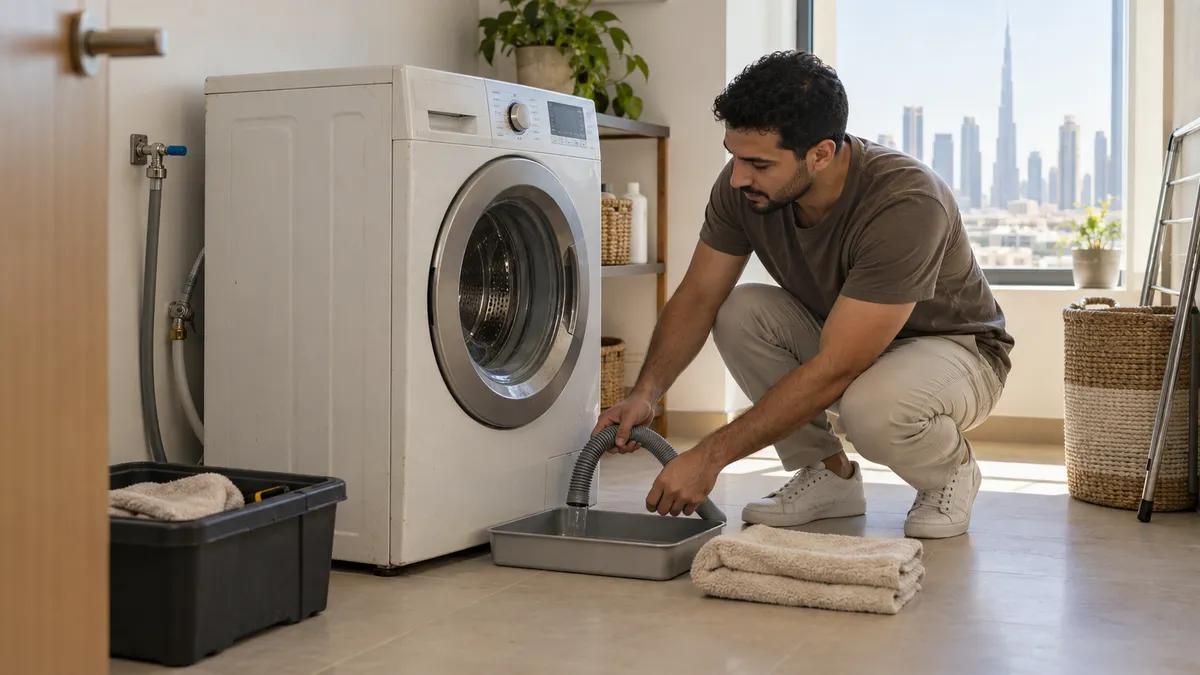
Drain the hot and cold tanks and let the unit sit unplugged before moving it, or it will leak in the lift.
A dispenser you own is an electrical appliance—resell a working one, recycle a broken one through an appliance route.
How do you dispose of a water dispenser in Dubai?
First check who owns it: if your water supplier provided the dispenser, cancel the service and arrange for them to collect it with the empty bottles. If you bought it, unplug it, drain both tanks, then sell or give away a working unit, or send a broken one to appliance recycling.
Almost every Dubai apartment has one, and most people forget about it until move-out week. Working out how to dispose of a water dispenser in Dubai is less about the machine and more about the paperwork behind it—who supplied it, whether there is a deposit, and what happens to the bottles.
Look for a sticker before you look for a buyer
Supplier-owned dispensers usually carry the supplier's logo or an asset sticker on the back or side. If yours has one, call the supplier first—selling it is not yours to do.
Supplier unit or your own? Check before anything else
Water companies commonly place a dispenser with a customer on a subscription, sometimes free and sometimes against a deposit or rental. When you stop the subscription, the unit goes back. Your account history, the original agreement or a quick call to the supplier will tell you which applies and whether any deposit is refunded on return.
If you bought the dispenser from a shop or online, it is yours. Tabletop units, bottom-loading models and larger floor-standing coolers all count as small electrical appliances once they leave your home.
Where the dispenser and its bits should go
Item
Usual owner
Where it goes
Dispenser supplied with a water subscription
The water supplier
Collected by the supplier when you cancel
Dispenser you bought yourself
You
Resale, giveaway or appliance recycling
Large refillable bottles
Usually the supplier
Returned to the supplier, often with a deposit
Small single-use water bottles
You
Plastic recycling, empty and capped
Drain and prepare the dispenser before it moves
Switch off the hot and cold switches, unplug the unit and let the hot tank cool—it can hold water hot enough to scald for some time. Remove the bottle, then empty the reservoir through the drain plug at the back, if your model has one, into a bucket or tray. Dispense from both taps until they run dry.
Leave the unit to stand for a few hours with the drain open, wipe out the reservoir and tape the taps. Units with a compressor should travel upright where possible and are best left upright for a while before being switched on again if they are going to a new home. Refrigerant-cooled units are also why broken dispensers belong in an appliance route rather than general waste.
Resale, recycling and the move-out rush
A clean, working dispenser sells or finds a new home quickly in tower community groups, because every new tenant needs one. Include the model, whether it heats and cools, and a photo of the inside of the reservoir—buyers ask about hygiene first.
A broken one should join other appliances on a collection rather than being left beside the building's bins. If you are clearing an apartment for handover, list the dispenser alongside the fridge or washing machine so it goes in the same visit.
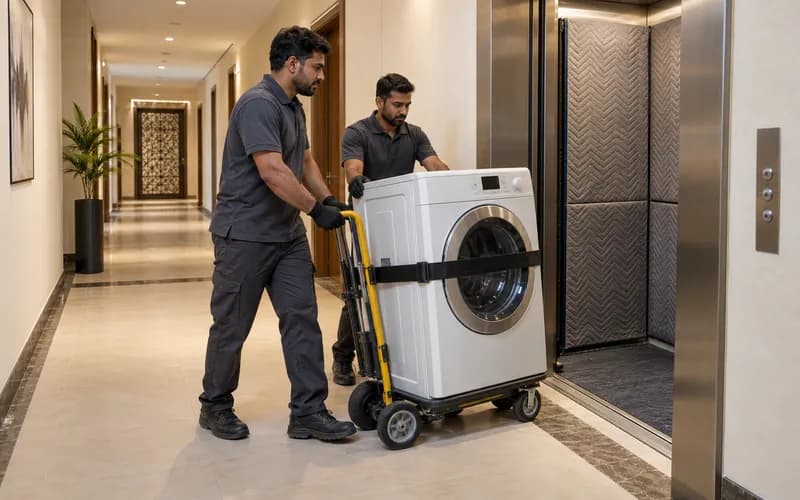
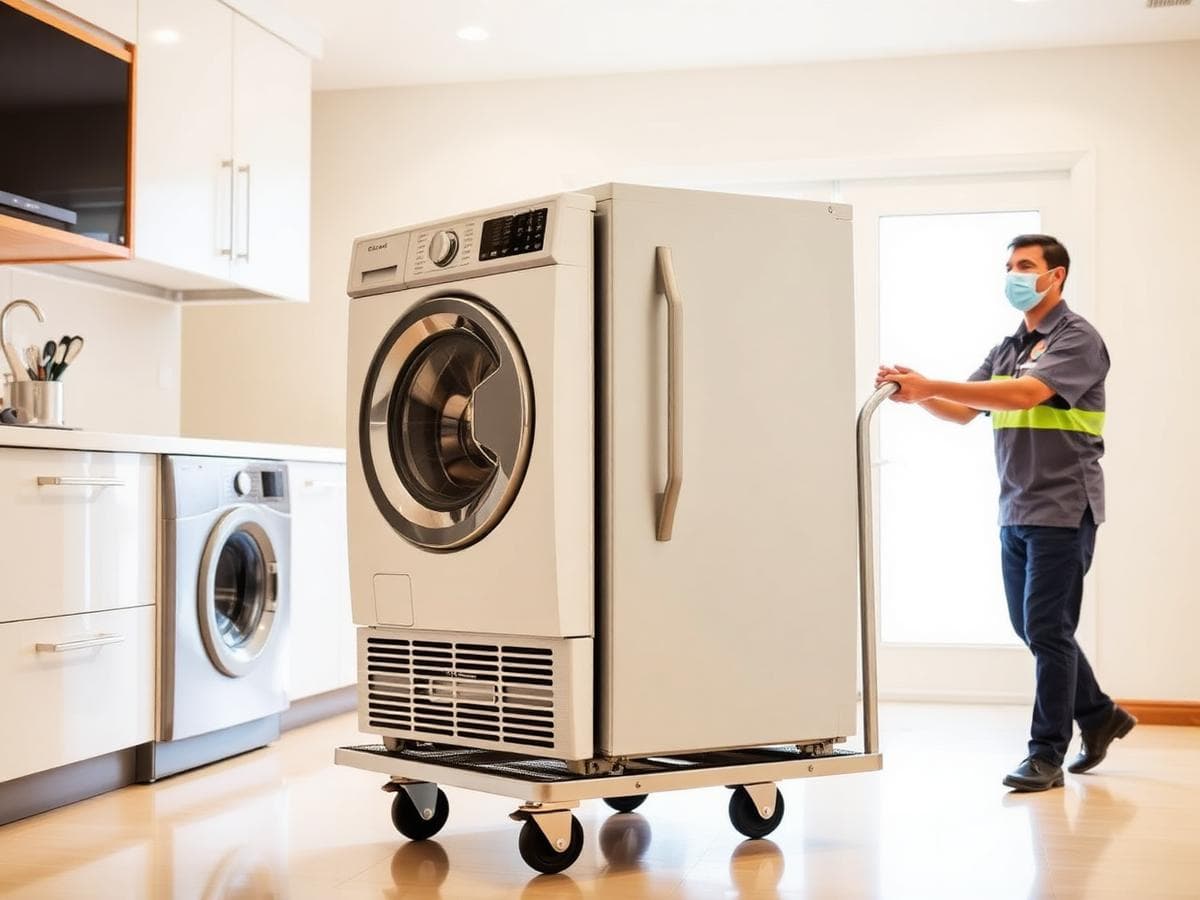
Drained and taped, a dispenser travels with the other appliances in a single lift trip.
What if I cannot reach the company that supplied my dispenser?
Keep the unit and bottles aside and try the contact details on the bottle labels or your payment history. If the supplier has changed or closed, keep a record of your attempts to return it. Only treat it as yours to dispose of once you are reasonably sure nobody will ask for it back.
Do I get money back for returning empty bottles?
It depends on your agreement. Some suppliers charge a bottle deposit and refund it when bottles come back in good condition; others include bottles in the subscription. Check your first invoice or ask the supplier before the last delivery so you know how many bottles you are expected to return.
Can a dispenser with mould in the reservoir still be donated?
Only if it can be fully cleaned and sanitised, and most people would rather not take the chance. A dispenser with visible growth inside the tank or taps is better recycled. If you are keeping a unit you plan to sell later, clean it now rather than storing it damp.
Planning a clearance in Dubai?
Send photos of what you need cleared on WhatsApp. Our team provides an instant, fixed upfront rate and handles elevator bookings and gate security smoothly.
Specialists in residential and commercial clearances across Dubai since 2016. Committed to safe property handovers, compliant electronic waste disposal, and municipal green waste diversion.
 Ask a Question