How to Dispose of Pool Chemicals in Dubai: Chlorine, Acids and the Villa Pump Room
Old tubs of chlorine and bottles of acid collect in villa pump rooms for years. Keep them sealed and apart, use up what is safe to use, and send the rest to a licensed route.
Keep every pool chemical in its original, labelled container, closed and separated from others.
Never mix products or combine old and fresh chlorine, even of the same type.
Using a sound product up at the dose on its label is often the simplest and safest route.
Expired, damaged or unlabelled chemicals go to a licensed hazardous-waste route, never the bin, drain or sand.
How do you dispose of pool chemicals in Dubai?
Keep every product in its original labelled container, closed and separate, and never mix leftovers or combine old and fresh chlorine. Offer sealed, in-date products to a pool service company or neighbour, then send expired, damaged or unidentified chemicals to a licensed hazardous-waste route rather than the bin, drain or sand.
Knowing how to dispose of pool chemicals in Dubai matters most in a villa pump room. These are hot, enclosed spaces, and the US Centers for Disease Control and Prevention advises storing pool chemicals below 35°C, dry and out of direct sun. Months of summer in a pump room are hard on chlorine products, and a move-out is often the first time anyone looks at what has built up.
Identify what you have before moving anything
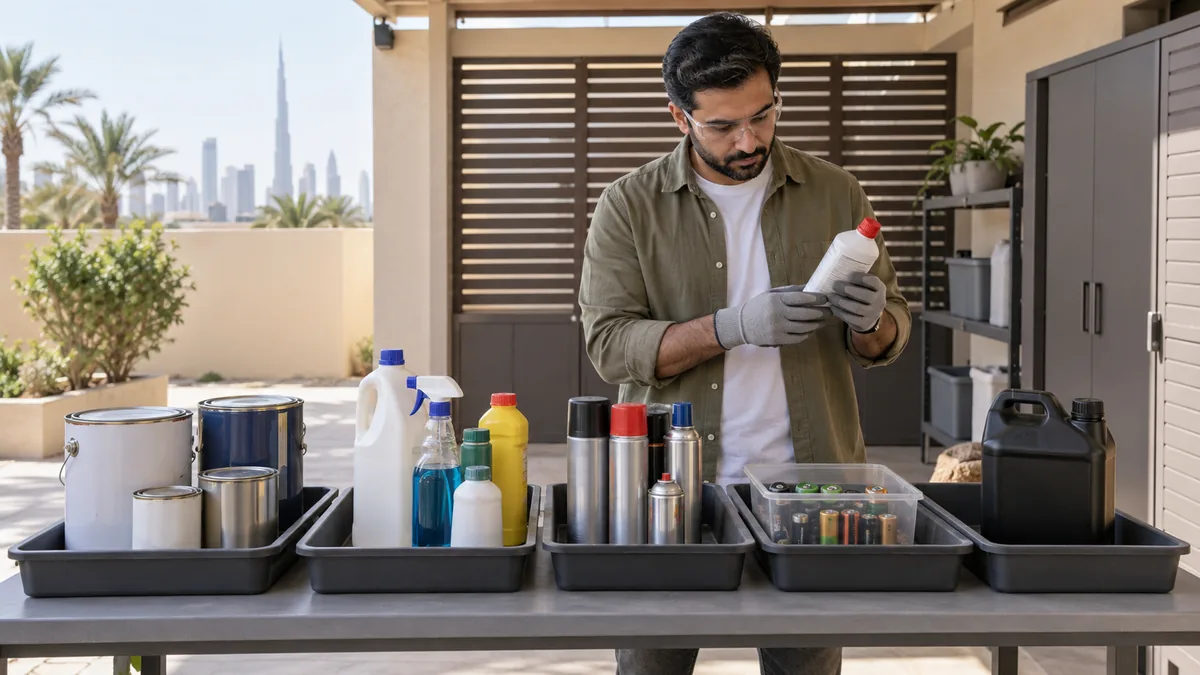
Read every label before touching a lid. Pool products fall into a few groups that must be kept apart: chlorine in tablets, granules or liquid; acids or pH reducers; and gentler products such as clarifiers and algaecides. Keep them in their original containers and never transfer them into buckets, water bottles or unlabelled jars.
Anything without a readable label, with a swollen lid, a crust around the cap or a strong chlorine smell should be left where it is, with the area ventilated. Do not open it to find out what it is. Tell the licensed collector exactly what you see so they can handle it as an unknown.
Common pool products and how to hold them until collection
Product
Why it matters
How to keep it
Chlorine tablets or granules
Strong oxidisers that react with moisture and other chemicals
Original tub, lid tight, dry, well away from acids
Liquid chlorine
Loses strength in heat and releases gas with acid
Upright in its original bottle, away from acid
Acid or pH reducer
Reacts dangerously with chlorine
Separate tray, never in the same box as chlorine
Clarifiers, algaecides and test reagents
Less reactive but still chemicals
Original bottles, upright, caps closed
Unlabelled, swollen or leaking containers
Unknown contents and risk
Do not open; ventilate and report to the collector
The rules that prevent accidents
Never mix pool chemicals with each other or with anything else, and never combine old and fresh product, even of the same type. The CDC warns that incompatible pool chemicals can cause fire, explosions or toxic gas. Do not tidy half-empty tubs into one container to save space, and keep everything dry, because some chlorine products react with small amounts of water.
If the pool is still in use and a product is sealed and in good condition, using it up at the dose on its label is often the simplest route. Do not tip leftovers into the pool, a drain, the garden or the sand to get rid of them; that is dumping, not dosing.
If a container is reacting, step away
Smoke, heat, fizzing or a sharp chlorine smell from a container means a reaction is under way. Leave the pump room, keep others out and call Civil Defence on 997. Do not try to move it or add water.
Getting chemicals out of the pump room
Household chemicals are hazardous waste and need an approved route. Dubai Municipality's hazardous-waste guideline sets out how such waste must be handled, stored and transported, and its duty-of-care rules make the waste producer responsible for passing it to an authorised carrier. Ask your pool maintenance company first; some will take back their own products. Otherwise use a licensed hazardous-waste collector, and ask community management whether there is a designated point.
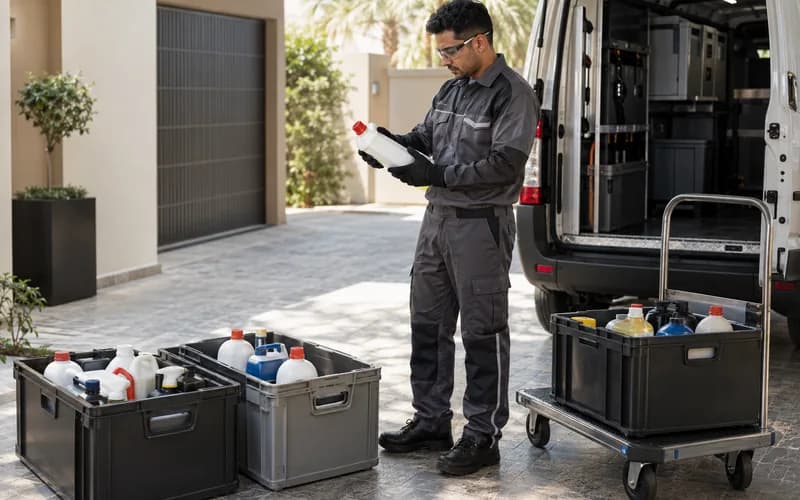
When products are moved, keep them upright in open crates, with chlorine and acid in separate crates and never stacked on top of each other. Keep them out of a closed car boot in the afternoon heat and go straight to the drop-off. Most junk-removal crews, including ours, do not carry chemicals in a mixed load; that is a job for a licensed specialist.
Chemicals stay upright in their original containers and are sorted into separate crates before a licensed collector loads them.
Clear the rest of the pool kit
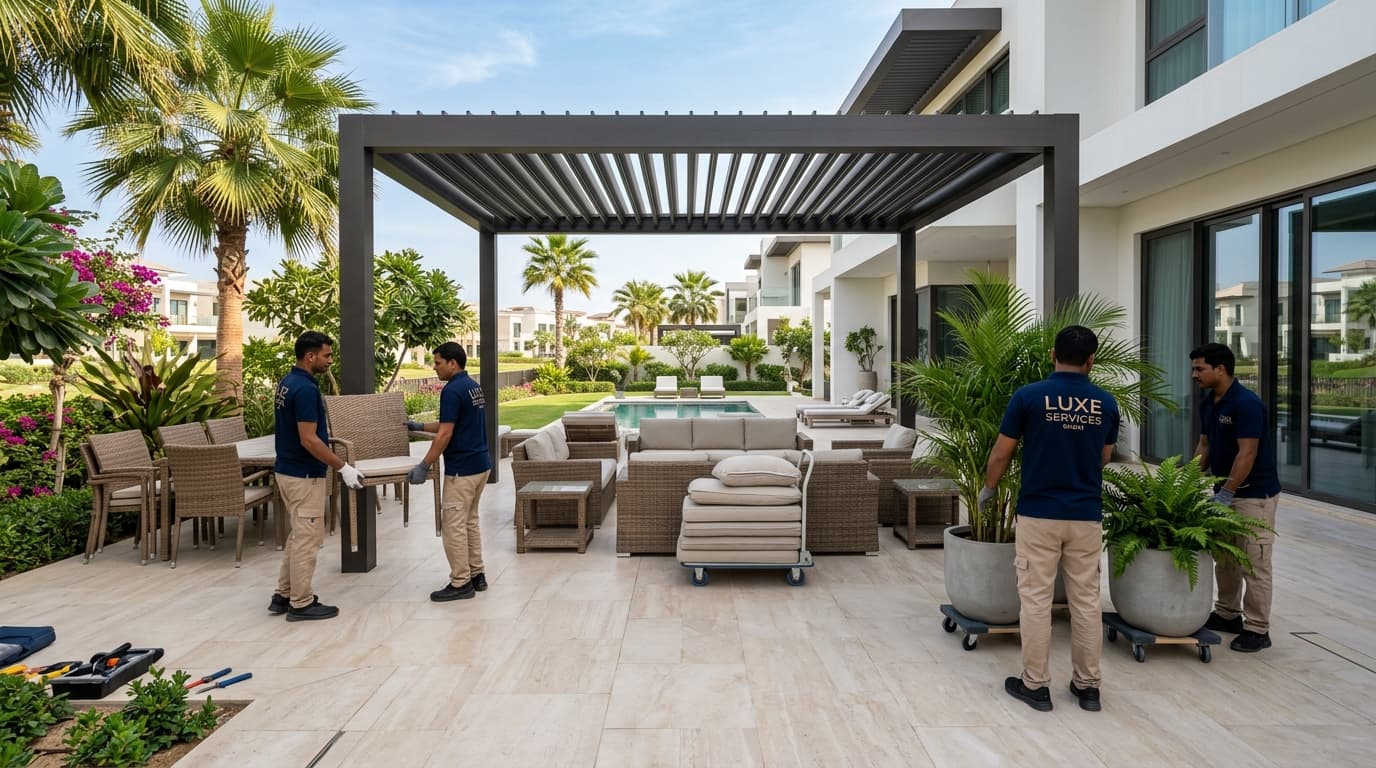
Empty chemical tubs and bottles should follow the instructions on their own labels; if the label does not say they can be rinsed and recycled, treat them with the chemicals. Old pumps, cracked filter housings, worn pool covers, robotic cleaners, broken loungers and faded umbrellas are a different matter and can go together in an ordinary bulky collection.
Filter sand or cartridges are normally replaced by the pool contractor during a service, so ask them to take the old media away. Once the chemicals have gone their separate way, the rest of the pump room and pool area is usually a straightforward one-visit clear-out.
No. Chlorine tablets are strong oxidisers and can react with other rubbish, moisture or heat in a bin or collection vehicle. Keep them sealed in their original tub, dry and away from acids, and use them up on the pool if they are sound or hand them to a licensed hazardous-waste route.
Do pool chemicals expire?
Many lose strength over time, especially liquid chlorine stored in heat. Check the label for a date or storage guidance. Tablets that have crumbled, become damp or caked, or tubs that smell strongly when closed have been stored badly and should be retired through a licensed route rather than used.
What happens to pool chemicals when I leave a rented villa?
Check whether they belong to you, the landlord or the pool contractor. Sealed, labelled products can be left for the contractor if the landlord agrees in writing. Do not leave open, damaged or unlabelled containers behind, as the next occupant or maintenance team will not know what they are handling.
Planning a clearance in Dubai?
Send photos of what you need cleared on WhatsApp. Our team provides an instant, fixed upfront rate and handles elevator bookings and gate security smoothly.
Tags:#Pool Chemical Disposal#Chlorine Safety#Villa Pool#Hazardous Waste
Dubai Junk Collection Editorial Team
Operations & Pricing Specialists
Specialists in residential and commercial clearances across Dubai since 2016. Committed to safe property handovers, compliant electronic waste disposal, and municipal green waste diversion.
 Ask a Question