How to Dispose of Old Paint in Dubai: Leftover Tins, Thinners and the Handover Touch-Up Can
Half-empty paint tins pile up after every repaint and move-out. Here is how to tell water-based from solvent-based paint, which tins can be dried out, and where the rest has to go in Dubai.
Check the label first: water-based emulsion and solvent-based enamel follow completely different disposal routes.
Small amounts of water-based paint can be left to dry solid; solvent-based paint, thinners and varnish should stay sealed for a licensed hazardous-waste collection.
Paint is excluded from Dubai Municipality's free bulky-waste pickup and must never go down a drain, a sink or a building chute.
Before throwing anything out at move-out, ask whether the landlord wants one labelled touch-up tin left behind.
How do you dispose of old paint in Dubai?
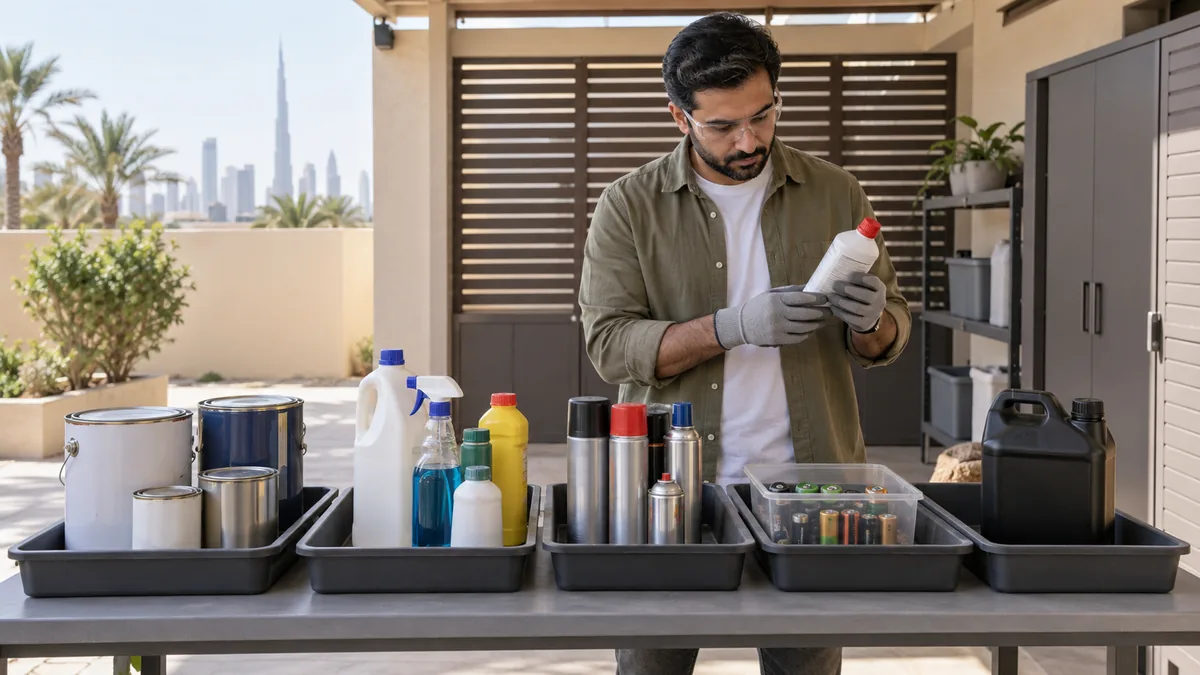
Sort the tins by type before anything else. Small amounts of water-based emulsion can be left open in a shaded, ventilated spot or mixed with sand until completely solid, then handled as dry waste. Solvent-based paint, thinners, varnish and spray cans stay sealed in their original containers for a licensed hazardous-waste collection. Nothing liquid goes into a drain or a building chute.
Most people only face the question once a repaint is over. The painter has left, the walls look right, and there are six tins in the maid's room or under the stairs: two nearly empty, one barely opened, and an unlabelled one that came with the flat. Knowing how to dispose of old paint in Dubai is less about finding one magic drop-off and more about splitting that pile correctly, because each part of it has a different route.
Water-based or solvent-based: reading the tin
Almost every interior wall in a Dubai apartment or villa is painted with water-based emulsion (often labelled acrylic or vinyl). Doors, skirting, metal railings and garden furniture are more likely to carry solvent-based enamel or gloss. The label normally says which one it is, and the clean-up instructions give it away: if brushes wash out with water, it is water-based; if the tin asks for white spirit or thinner, it is solvent-based.
When the label has worn off, smell and texture help. Solvent-based paint has a sharp chemical odour and a flammability symbol on most tins, while emulsion smells mild and rinses off a fingertip under the tap. Treat anything you cannot identify as the riskier of the two.
Common leftover paint products and the right route for each
Product
How to recognise it
Disposal route
Water-based wall emulsion
Mild smell; brushes clean with water; usually large white or pastel tins
Use up or give away; dry small remainders solid; recycle the empty metal tin
Solvent-based enamel or gloss
Strong odour; label calls for thinner or white spirit; flammable symbol
Keep sealed and labelled; licensed hazardous-waste collection
Thinners, white spirit, varnish, wood stain
Clear or amber liquids in metal tins or plastic bottles
Never dry out or pour away; licensed hazardous-waste collection
Spray paint and primer aerosols
Pressurised cans, often half-used
Keep out of heat; hand over with other hazardous waste, even when they feel empty
Dried-out tins and empty containers
Paint fully solid or tin scraped clean
Lid off, contents solid; can go with dry mixed waste or metal recycling where accepted
Drying out water-based paint the right way
A tin with a centimetre or two left in the bottom will dry on its own if you leave the lid off somewhere shaded, ventilated and away from children and pets. For more than that, stir in dry sand, sawdust or cat litter until the paint stops moving, then leave it for a few days. In Dubai's dry air this happens faster than most people expect, outside the humid summer months.
Once the contents are solid all the way through, the tin is no longer a liquid that can leak, splash or block a pipe. Leave the lid off so whoever collects it can see that. Buildings and collectors differ on whether they take dried tins with ordinary waste, so ask your facilities team or your collector before the tins go anywhere.
Do not try this with solvent-based paint or thinners. Evaporating them indoors fills the room with fumes, and in a hot storeroom or garage it creates a fire risk.
Drains, sinks and chutes are not an option
Washing paint into a sink, a floor gully or a storm drain, or dropping tins down a building chute, is exactly the kind of discharge Dubai's waste law prohibits. Chute tins also burst inside the bin room and coat the compactor. Rinse brushes from water-based paint into a bucket, let the solids settle, and dry them the same way as leftover paint.
Solvent paints, thinners and spray cans need a licensed route
Dubai's waste management law separates hazardous waste from ordinary household rubbish and does not allow it to be placed in containers meant for general waste. Paint is also on the list of items excluded from Dubai Municipality's free bulky-waste collection, so booking that pickup for a box of thinners will not work.
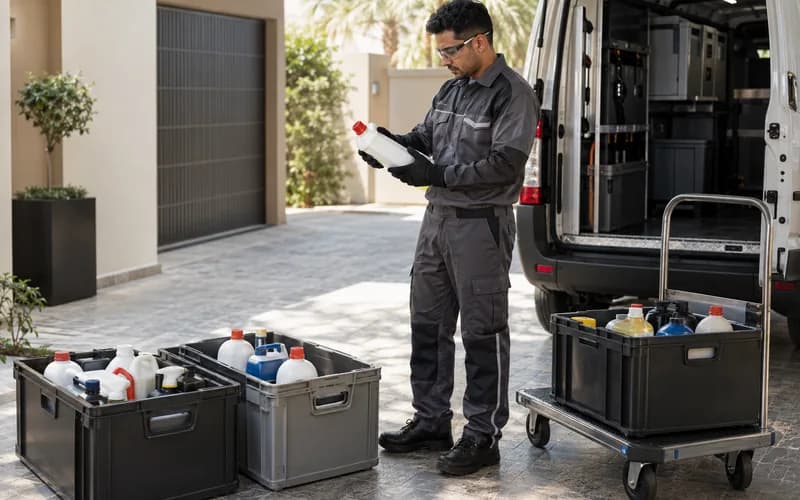
Keep these products in their original containers with the lids pressed down firmly, labels facing out, and store them off the floor in the coolest room you have, not a sun-facing balcony or a closed garage in August. Never combine leftovers into one tin to save space. Then arrange a collection through a licensed hazardous-waste contractor, or ask your building's facility manager, since many towers and communities already have one for their own maintenance waste. Our guide to household hazardous waste in Dubai covers the wider group of chemicals that follow the same route.
Solvent paints and thinners travel sealed, upright and separated, never loose in a general waste load.
Before you throw it out: the move-out touch-up tin
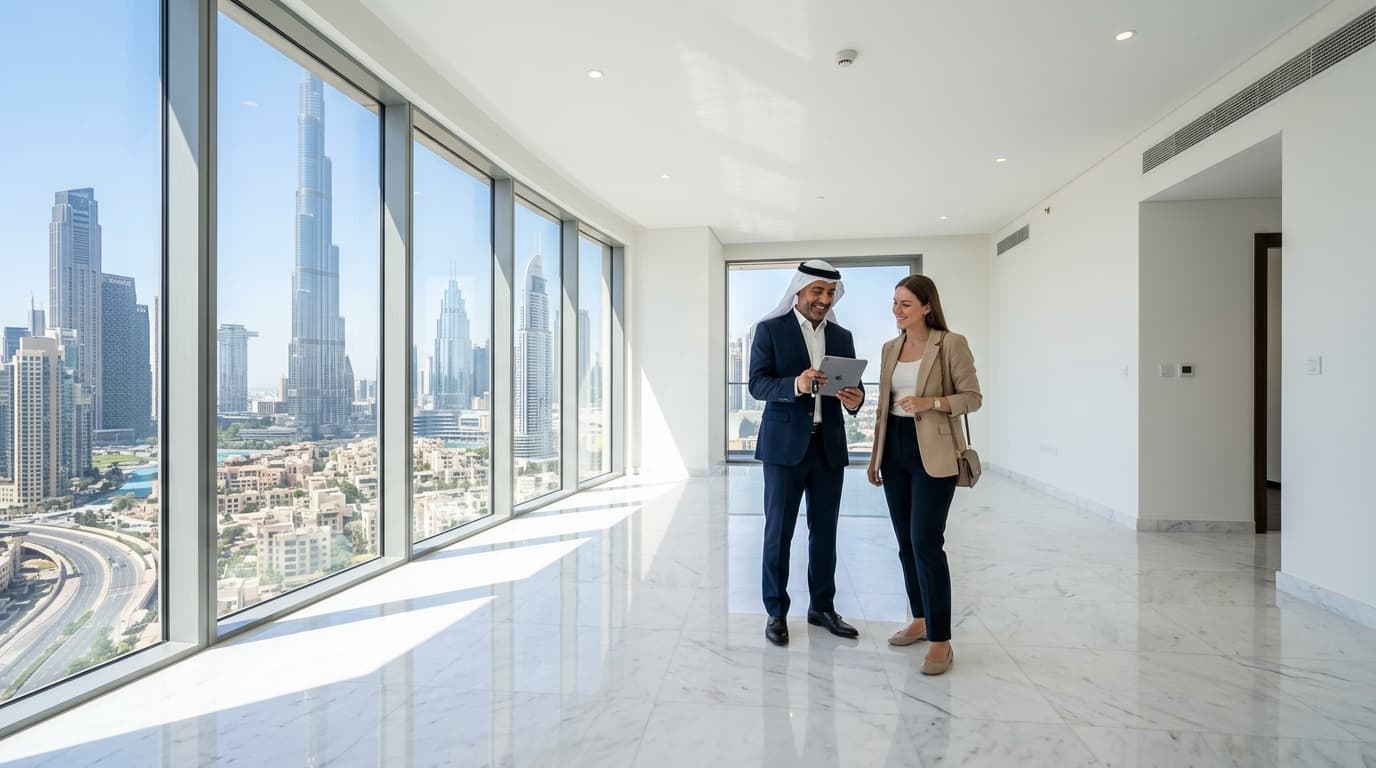
If you are repainting before handing a property back, the leftover paint may be worth more on the shelf than in the bin. Many landlords and property managers like to have one tin of the exact wall colour for touching up scuffs between tenants. Ask before you clear the storeroom, then leave a single sealed tin with the colour name and code written on the lid. That small step sits naturally alongside the rest of the move-out snagging needed to get your deposit back.
When you hire painters, put leftover paint into the job scope. Ask them to estimate quantities properly and agree in writing that part-used tins and thinners leave with them. It costs nothing to ask before work starts and saves you a storeroom of half-tins afterwards.
Unopened or barely used tins of a common colour are easy to pass on through community groups, neighbours or a building maintenance team. Only give away paint that is still in its original, labelled tin.
When the paint is part of a bigger clear-out
Paint tins rarely turn up on their own. They are usually sitting beside old furniture, broken fittings and boxes in a storeroom or garage that needs emptying before a handover. In that case, split the pile: dried tins, scraped-out empties and everything else can go with the general clearance, while liquid solvent products are set aside, sealed and labelled for the hazardous route.
When you send photos for a clearance quote, show the paint shelf clearly and tell us what is on it. We will explain upfront what goes with the general load and what needs separate specialist handling, so nothing is left behind on handover day.
Not through its free bulky-waste pickup, which excludes hazardous materials including paint, chemicals and batteries. Liquid paint, thinners and similar products need a licensed hazardous-waste route. Fully dried water-based tins are a different case, so check with your building or collector whether they accept them.
How do I know if an old tin of paint is still usable?
Open it and stir. Usable paint mixes back into a smooth liquid. If it smells sour or rotten, has mould on the surface, or has set into rubbery lumps that will not stir in, it has gone off and should be disposed of. Tins kept in a hot storeroom spoil much faster than tins kept indoors.
Can I put empty spray paint cans in the recycling?
Aerosols are pressurised and can still hold propellant even when they feel empty, so do not puncture, crush or put them in a chute. Keep them out of heat and hand them over with other hazardous household waste, or follow the specific instructions of the recycling point you use.
Planning a clearance in Dubai?
Send photos of what you need cleared on WhatsApp. Our team provides an instant, fixed upfront rate and handles elevator bookings and gate security smoothly.
Specialists in residential and commercial clearances across Dubai since 2016. Committed to safe property handovers, compliant electronic waste disposal, and municipal green waste diversion.
 Ask a Question