How to Dispose of a Water Filter in Dubai: Under-Sink RO Systems, Tanks and Move-Out Plumbing
Under-sink reverse osmosis water filters require proper plumbing isolation, tank draining and e-waste separation. Safely disconnect and dispose of home filtration units.
Under-sink Reverse Osmosis (RO) systems must be isolated at the cold-water feed stop and the plumbing restored to landlord spec to prevent Ejari move-out deposit deductions.
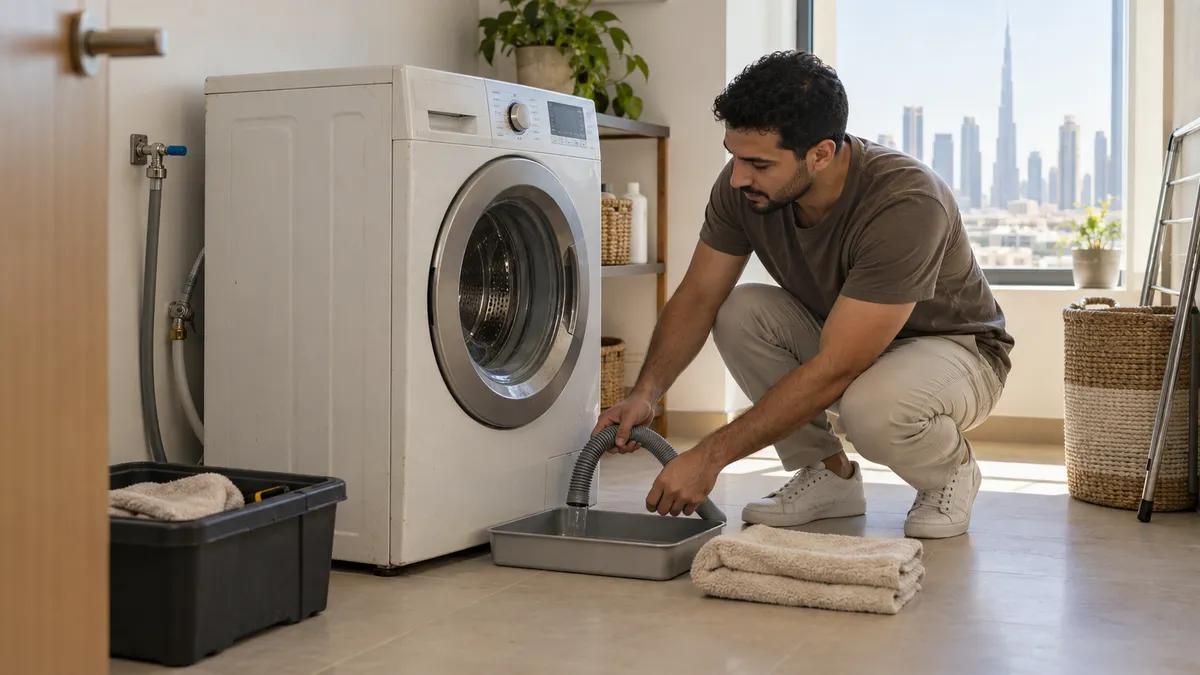
Pressurised metal storage tanks retain several litres of stagnant water under bladder pressure; depressurise and drain fully through the tap to avoid corridor leaks.
Used sediment and activated carbon filter cartridges belong in municipal waste, while 24V electric booster pumps and power transformers must be routed to e-waste recycling.
How do you dispose of a water filter in Dubai?
To dispose of a water filter in Dubai, turn off the cold-water feed valve, depressurise and drain the storage tank, and disconnect the plumbing tubing. Spent carbon and sediment cartridges go to general waste, while the electric booster pump and transformer must be recycled through authorized UAE e-waste collection channels.
Due to the mineral profile of municipal desalinated water, multi-stage under-sink Reverse Osmosis (RO) systems and countertop filtration units are installed in thousands of villas and apartments across Downtown Dubai, Jumeirah Village Circle, and Dubai Hills Estate. When moving out, renovating kitchens, or replacing aged hardware, tenants and landlords face specific plumbing disconnections and waste segregation requirements.
Plumbing isolation and restoring landlord fittings for Ejari handover
Most under-sink RO systems tap into the flexible cold-water riser underneath the kitchen sink via a brass or chrome tee-adapter with a small quarter-turn ball valve. Before unthreading any components, turn off the main under-sink angle stop valve clockwise until firmly seated. Open the kitchen sink mixer on cold to verify water flow has ceased.
Tenants preparing for an end-of-tenancy snagging inspection must remove the aftermarket tee-valve and reconnect the landlord's original flexible braided hose directly to the angle stop using fresh PTFE plumber's thread tape. Leaving modified pipework, unsealed drain saddle clamps, or cut sink-top faucet holes can lead to significant deductions from your security deposit; review our comprehensive guidance on how to get your security deposit back in Dubai.
Inspect the waste drain saddle clamp
Under-sink RO systems discharge brine wastewater through a plastic saddle clamped around the sink's P-trap drain pipe. If you remove the clamp, replace the drilled drain pipe section with an inexpensive standard PVC pipe piece to avoid water leaks under the sink cabinet.
Depressurising and draining the steel bladder accumulator tank
A standard 4-stage or 5-stage residential RO system relies on a white steel or composite pressurised accumulator tank containing an internal butyl rubber bladder. Even when the water feed is closed, the tank holds between 8 and 12 litres of water held under approximately 7 to 10 PSI of pre-charge air pressure.
Never attempt to haul a full tank. Keep the dedicated countertop RO faucet open while the system drains until the water slows to a trickle. If the internal bladder has failed and water remains trapped, locate the Schrader air valve on the lower side of the tank and use a bicycle tyre pump to pressurise the chamber, forcing the remaining water out through the discharge port. Transporting a drained tank prevents stagnant water spills across kitchen tiles and apartment service elevators.
Completely draining pressurised water tanks and coiling hoses prevents slip hazards in residential freight corridors.
Cartridge segregation: PP sediment, activated carbon and TFC membranes
Residential water filtration systems contain multiple disposable cylindrical filter cartridges that require proper sorting before disposal. Unscrew the vertical plastic filter sumps using the spanner wrench provided with the unit, tipping remaining water into the sink.
First-stage melt-blown polypropylene (PP) sediment filters and second/third-stage granular or block activated carbon (GAC/CTO) filters trap heavy particulates, rust scales, and chlorine residues. Once used, these biological and mineral traps cannot be commercially recycled and must be bagged tightly for municipal waste. The delicate Thin-Film Composite (TFC) semi-permeable membrane should also be discarded in general waste, while the rigid outer polypropylene housing cylinders can be rinsed and sorted with rigid plastics.
Booster pumps, electronic transformers and booking appliance collection
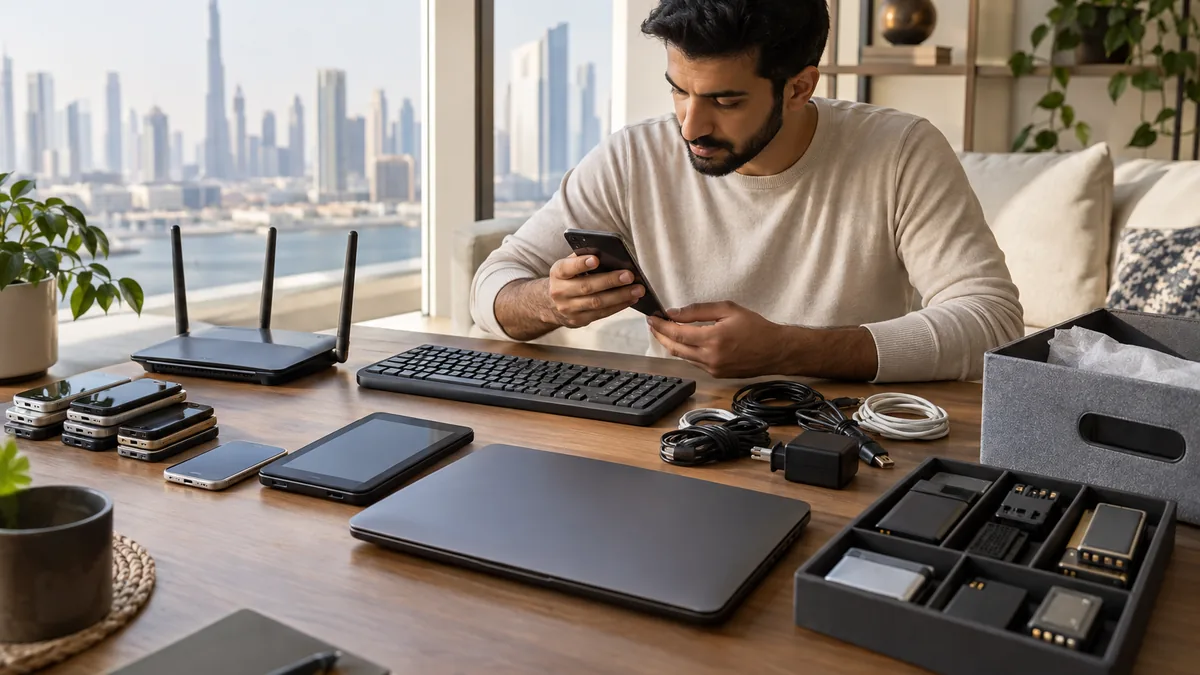
Premium RO filtration units include an electric 24V DC booster pump, low-pressure and high-pressure cut-off switches, and an external 220V plug-in transformer adapter. These items constitute high-grade electronic waste (WEEE). The pump contains copper motor windings, aluminium bracket housings, and internal magnetic rotors that must not be sent to desert landfills.
Snip the low-voltage wires flush, group the electrical components, and take them to an authorized e-waste kiosk; see our detailed directory on where to recycle electronics in Dubai. If you are vacating a villa or replacing multiple kitchen appliances simultaneously, bundle your old RO system, broken microwaves, and water coolers using our dedicated appliance removal service or comprehensive villa and apartment cleanouts.
Can I throw an old under-sink water filter into my building garbage room?
No. Assembled water filtration units contain heavy steel pressure vessels, brass fittings, and electrical booster pumps that cannot be processed in residential garbage chutes or communal bins. Separate the cartridges into municipal waste and route the metal tank and pump through scrap or appliance recycling.
How do I know if my RO tank is empty before moving it?
An empty residential RO tank weighs around 3 to 4 kilograms. If the tank feels heavy (over 10 kilograms) and you hear sloshing when tipping it, water is trapped behind a waterlogged bladder. Use a hand pump on the Schrader air nipple to displace the water before collection.
What happens to the standalone countertop water cooler and filter?
Countertop bottleless water coolers often contain miniature refrigeration compressor circuits or thermoelectric Peltier cooling modules. Compressor-driven coolers require licensed refrigerant degassing identical to full-sized water dispensers before scrap processing; see our guide on [water dispenser disposal in Dubai](https://dubaijunkcollection.com/blog/how-to-dispose-of-a-water-dispenser-in-dubai).
Planning a clearance in Dubai?
Send photos of what you need cleared on WhatsApp. Our team provides an instant, fixed upfront rate and handles elevator bookings and gate security smoothly.
Specialists in residential and commercial clearances across Dubai since 2016. Committed to safe property handovers, compliant electronic waste disposal, and municipal green waste diversion.
 Ask a Question