How to Dispose of a Chest Freezer in Dubai: Defrosting, Refrigerant and Heavy Lifting
Empty and defrost a chest freezer without flooding the route, secure its lid and baskets, preserve the sealed cooling circuit and plan an upright lift with appliance specialists.
Remove food and complete defrosting before collection; hidden ice around the liner can release water long after the visible frost melts.
Keep the compressor and refrigerant circuit sealed so a qualified recovery route can handle the cooling system correctly.
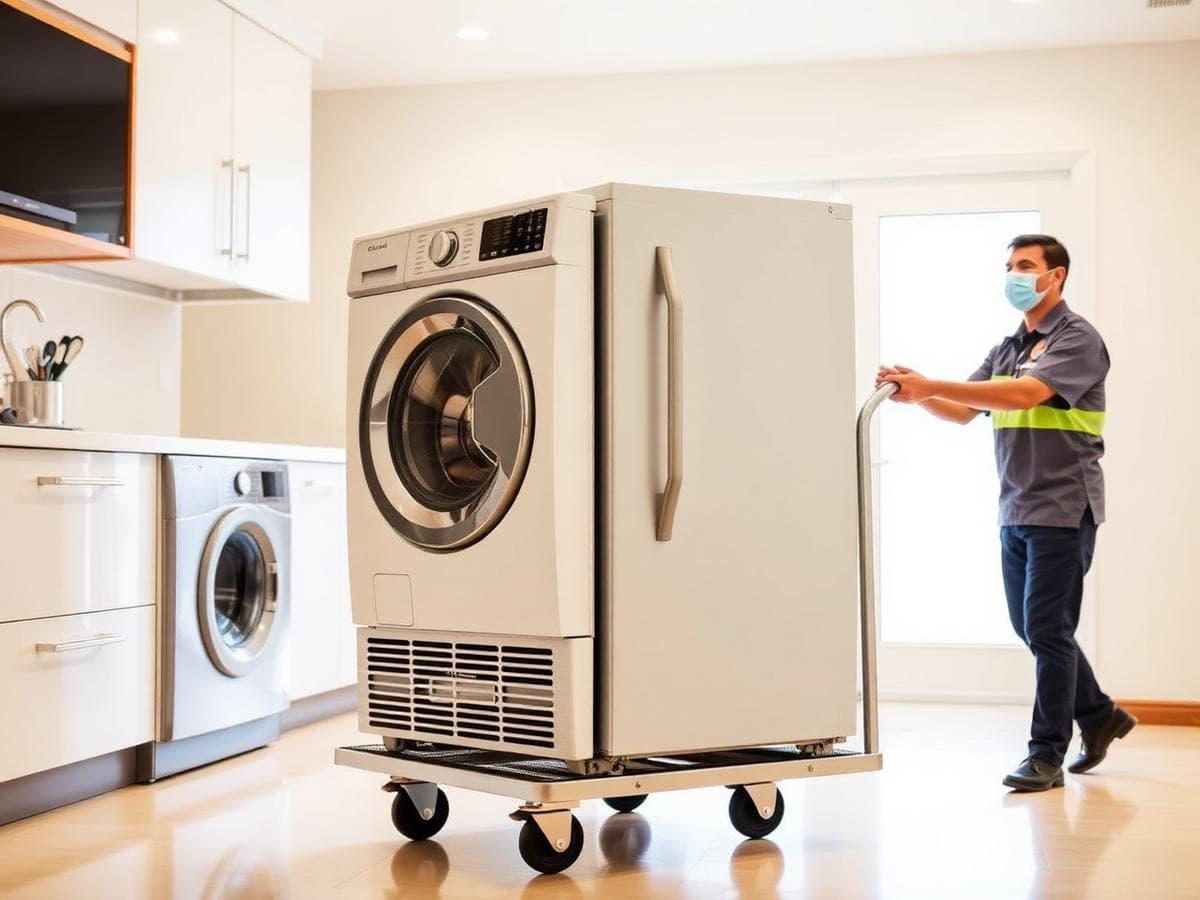
Secure the lid, baskets, drain plug and power lead, then move the freezer upright with a trolley rated for its full weight.
How do you dispose of a chest freezer in Dubai?
To dispose of a chest freezer in Dubai, remove all food, unplug and fully defrost it, drain and dry the cabinet, secure the lid, baskets, plug and cable, and keep the refrigerant circuit intact. Measure the route, transport the unit upright, and use an appliance collection service that accepts refrigerated equipment for specialist recovery.
Chest freezers create a different access problem from upright fridges. Their footprint is wider, the lifting points sit low and an unsecured top can swing open while the cabinet is tilted. Meltwater hidden below baskets is the mess that most often reaches the corridor.
Empty, defrost and dry the cabinet completely
Move usable food to another freezer or insulated containers before unplugging. Follow the manual's defrost procedure, protect the floor with shallow trays and towels, and open the drain only into a container you can control. Never chip ice with a knife or screwdriver; puncturing the liner may damage concealed cooling pipework.
Remove baskets after the ice releases, clean spills and leave the lid open in a ventilated room until the seals and corners are dry. Refit the drain plug so it is not lost, then place baskets inside and restrain them. Do not leave an unplugged freezer closed with moisture and food residue in Dubai's heat, where odour and mould develop quickly.
Plan defrosting before the pickup day
A thickly iced chest freezer can take much longer than expected to drain. Start early enough for the liner, drain channel and seals to dry before the crew arrives.
Keep the sealed cooling system intact
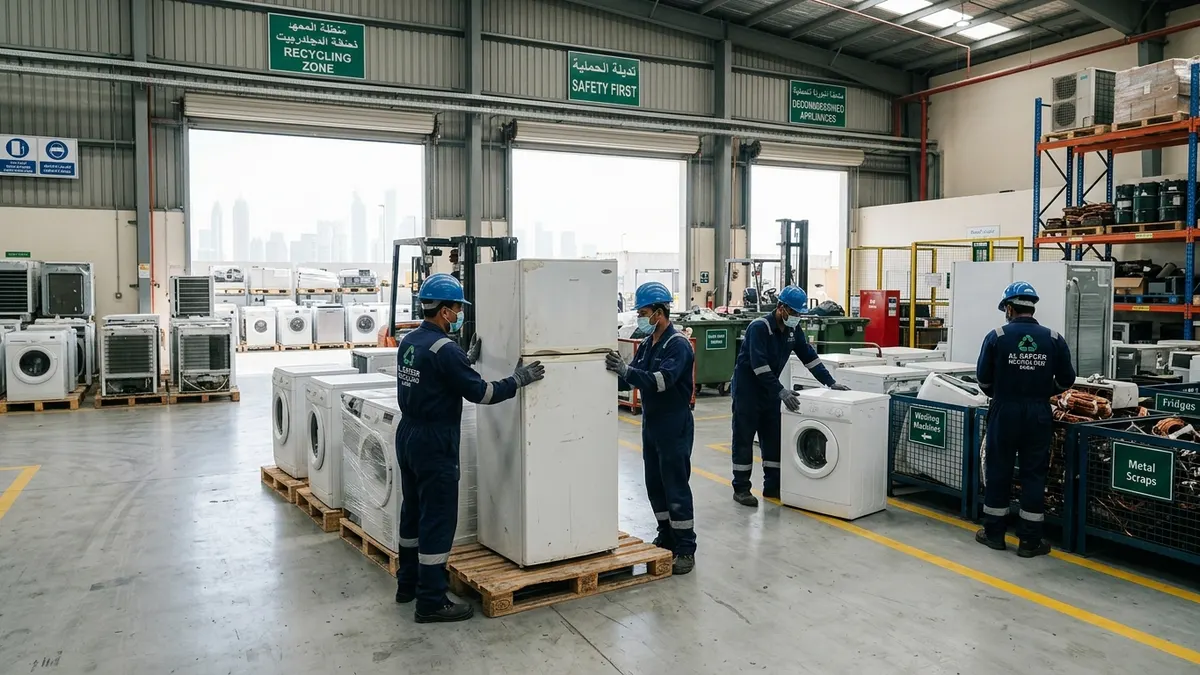
Read the rating plate and photograph the model and refrigerant information for the collector. The compressor, oil and refrigerant-bearing tubing belong together until handled by a suitable appliance-recovery specialist. Do not cut copper pipes, remove the compressor or drill the cabinet to make it lighter.
If the freezer still works, include a short temperature test and the lid-seal condition in any resale listing. A failed thermostat may be repairable; a punctured liner, severe cabinet corrosion or compressor fault usually points toward recovery rather than reuse. Disconnecting it safely does not mean dismantling its refrigeration system at home.
Keeping the compressor and pipework sealed allows refrigerant and recoverable materials to be handled through the correct process.
Secure the lid and survey the whole removal route
Close the lid and hold it with a removable strap that will not crush the gasket. Coil the cable, protect exposed hinges and keep the cabinet upright on a rated appliance trolley. Measure its width against doors, kitchen islands, villa gates and service-lift openings, allowing room for hands and protective blankets.
How long should a chest freezer defrost before collection?
There is no reliable universal time because ice thickness, room temperature and the model vary. Start well before pickup, follow the manual, and confirm that the drain channel, inner corners and seals are dry rather than relying on a fixed number of hours.
Can a chest freezer be transported on its side?
Upright transport is the safest default because it protects the compressor, oil and pipework. If an unavoidable tilt is permitted by the manufacturer, the receiving technician should decide the resting period before the appliance is powered again.
Can I remove the compressor to make the freezer lighter?
No. Removing it can release refrigerant and oil and creates sharp, contaminated components. Keep the sealed circuit intact and declare the appliance type and refrigerant label to the collector.
What happens to food left inside an unwanted freezer?
It must be removed before appliance collection. Separate safe food for use or donation under the recipient's rules, and bag spoiled contents through the building's approved household-waste route; appliance recyclers are not food-waste collectors.
Planning a clearance in Dubai?
Send photos of what you need cleared on WhatsApp. Our team provides an instant, fixed upfront rate and handles elevator bookings and gate security smoothly.
Specialists in residential and commercial clearances across Dubai since 2016. Committed to safe property handovers, compliant electronic waste disposal, and municipal green waste diversion.
 Ask a Question