Sell vs Donate Old Furniture in Dubai: Which Route Fits Your Timeline?
A high asking price means little if collection falls through. Use this practical test to choose between selling, donating, and scheduled furniture removal in Dubai.
Sell furniture when it is clean, complete, easy to describe, and valuable enough to justify messages, viewings, negotiation, and collection coordination.
Donate furniture when it remains genuinely usable but the likely resale return is less important than a simpler, confirmed reuse route.
Set a short listing deadline before advertising so a slow sale cannot consume the final days before a move, handover, delivery, or renovation.
Confirm who will dismantle and carry the item, plus the building's service-lift and vehicle rules, before agreeing to any buyer or donation pickup.
Use scheduled furniture removal when an item is damaged, repeatedly rejected, difficult to move, or still present when the property deadline becomes fixed.
Sell vs donate old furniture in Dubai: the short answer
When deciding whether to sell vs donate old furniture in Dubai, start with your deadline rather than the price you hope to receive. Sell a clean, complete, desirable piece when you have time to photograph it, answer questions, arrange access, and recover from a cancelled collection. Donate a useful item when reuse matters more than maximising its value and a recipient has confirmed acceptance. Arrange removal when the piece is damaged, has no committed taker, or must leave on a fixed date.
The wrong route is usually the one that depends on an uncertain pickup during your final 24 hours. A buyer's enthusiastic message is not a collection plan, and a donation enquiry is not an acceptance. Treat the item as unresolved until the date, time, access route, dismantling responsibility, and transport are confirmed.
Decide the fallback before you list
Choose the date on which an unsold item switches to donation or paid removal. Put that date in your calendar before the advert goes live, not after several buyers cancel.
Use five factors, not the original purchase price
What you paid is useful context, but it does not decide today's best route. Buyers and recipients judge current condition, style, dimensions, completeness, and the effort required to collect. Your own decision also depends on how much time and coordination you can spend before the space must be clear.
Furniture exit-route decision matrix
Factor
Sell
Donate
Schedule removal
Condition
Clean, stable, complete, easy to present
Clean, safe, functional, genuinely reusable
Broken, stained, unstable, incomplete, or rejected
Likely value
Worth the listing and collection effort
Modest return or reuse is the priority
Little realistic resale or reuse demand
Available time
At least several days with a fallback window
Enough time to confirm acceptance and pickup
A firm delivery, move, or handover deadline
Access
Buyer can meet all building and carrying requirements
Recipient confirms vehicle, crew, and route
Crew plans dismantling and the service route
Your effort
Photos, messages, negotiation, supervision
Acceptance checks and collection coordination
One quote and a booked collection window
Give a sale a short, well-prepared test
A good listing removes the questions that cause serious buyers to hesitate. Clean the piece, photograph every side in daylight, show any damage honestly, and provide width, depth, height, brand if known, floor number, lift availability, and the collection deadline. State whether the buyer must dismantle it and whether security needs vehicle or visitor details in advance.
Use an initial 48-hour response check. If you receive only generic enquiries, requests for free delivery, or no one willing to commit to a collection slot, adjust the price once or activate the fallback. Extending an unrealistic listing every day can cost more time than the item is likely to return.
Photograph the full item, labels or maker marks, joints, upholstery, and every flaw.
Measure doorways and lift access as well as the furniture itself.
Offer a small number of realistic collection windows instead of unlimited availability.
Do not reserve the item for an unconfirmed buyer beyond your fallback date.
Keep personal documents, building access cards, and other belongings out of listing photos.
Donation still needs an acceptance check
Donation is a reuse route, not a way to transfer unusable furniture. Before planning around a charity, community group, or individual recipient, send current photographs and dimensions and ask whether the exact item is accepted. Policies and pickup capacity vary, so get confirmation for the furniture you have rather than relying on an old list or a friend's experience.
Clean the piece and keep all shelves, fixings, cushions, and matching parts together. A wardrobe offered for reuse is only as useful as the set that arrives, which is why labelling its panels and keeping every hinge and runner with them for reassembly matters before a recipient collects it. If it needs repair, disclose that clearly. A recipient may decline a damaged wardrobe, sagging sofa, heavily marked mattress, or incomplete flat-pack because handling and repair would cost more than the item can reasonably provide in use.
Collection access can change the answer
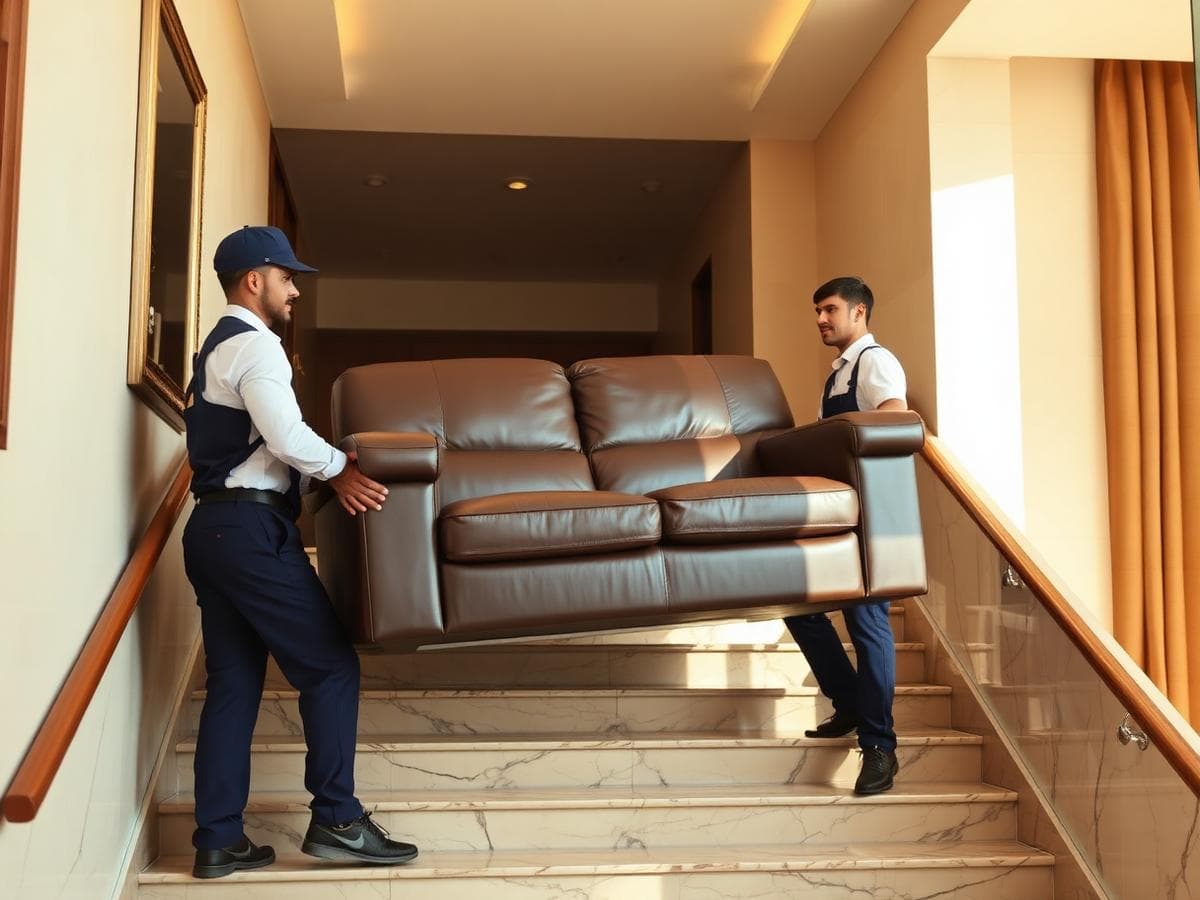
A sale or donation can fail even when the furniture itself is wanted. The collector may arrive in a vehicle the community will not admit, assume the sofa fits in a passenger lift, or discover that a wardrobe needs tools and two people. Confirm the service lift, loading area, contractor or visitor hours, parking height, and any required security details before the appointment.
Agree dismantling in writing. If a buyer says they will collect, ask whether they are bringing the tools, blankets, trolley, and help needed to move the item without damaging walls or common areas. Keep corridors and fire equipment clear while the piece is waiting; do not stage it outside the apartment for an uncertain arrival.
The collection route, dismantling plan, and lift booking matter as much as the furniture's condition.
Know when scheduled removal is the responsible route
Choose furniture removal when the item is unsafe or unsuitable for reuse, when two collection attempts have failed, or when the remaining buffer is too short for another uncertain arrangement. Share clear photos, dimensions, location, floor and lift details so the crew can quote the actual job and arrive with the right vehicle, tools, and number of people.
Dubai Junk Collection can dismantle and remove sofas, wardrobes, beds, tables, and mixed household furniture from apartments and villas. Send the item photos and your final clear-by date on WhatsApp. The aim is not to rush a reusable piece into disposal; it is to give every route a realistic deadline and make sure the property is clear when promised.
Frequently Asked Questions
Should I deep-clean furniture before offering it for sale or donation?
Vacuum upholstery, wipe hard surfaces, and remove ordinary dust so the real condition is easy to judge. Do not use strong chemicals, soak fabric, or attempt a repair you cannot finish safely. If specialist cleaning would cost more than the likely return, disclose the condition clearly and let the recipient decide.
Is it better to list several furniture pieces separately or as a set?
List matching items as a set when separating them reduces usefulness, such as a dining table with its chairs. For unrelated pieces, separate listings usually make collection easier and widen the audience. If your deadline is close, offer a clearly photographed group only to someone who confirms vehicle space for every piece.
Should I take a deposit from an online furniture buyer?
Use the marketplace's current safety guidance and a payment method you understand. Never share one-time passwords, card details, identity documents, or banking login information, and be cautious with links sent by a buyer. Keep collection arrangements inside the platform where possible and confirm any payment in your own account.
What record should I keep after furniture leaves?
Keep the collection message, date, a photo of the cleared space, and any receipt or completion confirmation provided. For a rented property, also photograph walls, floors, doors, and the common-area route after the item has gone. These records help resolve questions about what was removed and the condition left behind.
Planning a clearance in Dubai?
Send photos of what you need cleared on WhatsApp. Our team provides an instant, fixed upfront rate and handles elevator bookings and gate security smoothly.
Tags:#Sell vs Donate Old Furniture Dubai#Furniture Removal Dubai#Sofa Removal Dubai#Wardrobe Removal Dubai#Furniture Collection Dubai
Dubai Junk Collection Editorial Team
Operations & Pricing Specialists
Specialists in residential and commercial clearances across Dubai since 2016. Committed to safe property handovers, compliant electronic waste disposal, and municipal green waste diversion.
 Ask a Question