How to Dispose of Sun-Damaged Outdoor and Balcony Furniture in Dubai
Two summers is usually enough to finish a patio set here. What is left is a sorting job by material, plus a handful of items that are genuinely dangerous to lift.
Sort outdoor furniture by material before you sort it by item: aluminium and steel go to scrap, sound hardwood has resale value, and perished resin, foam and canvas are waste.
Sun-perished plastic and synthetic rattan fail when lifted rather than when used, so carry from the frame base and never stack brittle chairs to move them.
Glass table tops travel separately, taped and carried on edge by two people. They are the most common injury on an outdoor clearance.
A barbecue gas cylinder never goes in a clearance truck. Disconnect it and return it to the supplier or an exchange point.
Book the clearance in the shoulder months and take a morning slot. Balcony and garden work in an August afternoon is slower, hotter and less safe for everyone.
How do you dispose of old garden furniture in Dubai?
Separate it by material first. Aluminium and steel frames go to scrap metal, sound hardwood is worth reselling or rehoming, and perished resin wicker, foam cushions and torn canvas are waste. Then either take it to a recycling centre yourself or book a collection. It never goes beside a community bin.
Outdoor furniture is the one category where people wait too long. Indoors, a sofa is replaced because tastes change. Outdoors, a set is used until the afternoon a chair leg gives way, and by then nothing in the set is donatable, resaleable or safe to stack.
Sun does not fade outdoor furniture here, it finishes it
Surface temperatures on an unshaded terrace in July sit far above air temperature, and the ultraviolet load runs year round. Synthetic rattan dries out and snaps at the weave, usually starting on the side that faces west. Moulded resin chairs whiten, then crack at the leg joints without warning. Powder coating lifts at the welds and steel corrodes outward from underneath, which is why a table can look sound and still fail at the base.
On the coast, in the Marina, JBR, Palm Jumeirah and Dubai Creek Harbour, add salt to that, and it takes stainless fixings and untreated fasteners apart faster than anything inland. Shamal dust packs into the weave of rattan and into cushion seams, holds moisture from irrigation and dew, and mildews from the inside.
One material survives this: teak and similar dense hardwoods go silver-grey on the surface but stay structurally sound for years. If the joints are still tight, a sand and an oil brings a teak set back, and it has real resale value in the shoulder season. It is almost always worth separating the hardwood before the rest is cleared.
Brittle furniture fails when you lift it
A resin or synthetic rattan chair that held someone all winter can split at the leg when it is carried by the armrest. Lift from the frame base with two hands, move perished chairs one at a time, and keep children and pets clear of the staging area.
Sort by material, not by item
A patio set is rarely one material. A typical dining set is an aluminium frame, a glass or ceramic top, synthetic weave, foam cushions and a polyester cover, and each of those has a different destination. You do not need to dismantle anything yourself — a crew will cut weave from frames on site — but knowing what is in the pile makes the quote and the sorting faster.
Outdoor furniture by material and route
Material
Typical items
Route
Notes
Aluminium
Lounger frames, dining chair frames, umbrella poles
Scrap metal
Light to carry and the best value per kilo in the pile
Heavy and rust-sharp; two people and gloves, not one person and optimism
Synthetic rattan over a frame
Sofa sets, corner units, egg chairs
Weave to waste, frame to scrap
Separated on site so the metal is not lost inside the plastic
Teak and dense hardwood
Dining tables, benches, steamer chairs
Resale, rehoming or timber recovery
Check the joints before writing it off; the grey surface is cosmetic
Glass and ceramic
Table tops, fire pit surrounds
Handled separately, never in a mixed load
Tape, wrap and carry on edge; see the section below
Foam, canvas and fabric
Cushions, parasol canopies, sun bed covers
Waste once mildewed or perished
Charities decline outdoor cushioning; it holds damp and dust
Artificial grass and decking tiles
Balcony turf, interlocking deck panels
Bulk waste, by weight
Both hold kilos of trapped sand, so weight always surprises people
Glass tops, umbrella bases and the things that hurt people
Tempered glass table tops are the most common injury on this kind of job. They chip at the edge during a carry, and a chipped tempered panel can let go later, all at once, into small fragments. Tape a grid across the face before it moves, wrap the edges, and carry it vertically on its edge with a person at each end. Never lean a top unsupported against a wall while you fetch something else.
Parasol bases are the other one. A granite or concrete base weighs a great deal for its size and has no useful grip, so it goes on a trolley or gets carried low between two people, and it never gets rolled down a step. If the parasol itself is intact and the base is sound, the base is often worth keeping for the next set.
Then there is the barbecue. Detach the gas cylinder before anything else, cap it, and return it to your supplier or an exchange point. Cylinders are not accepted in a clearance truck under any circumstances, full or empty, and a crew will refuse one on sight.
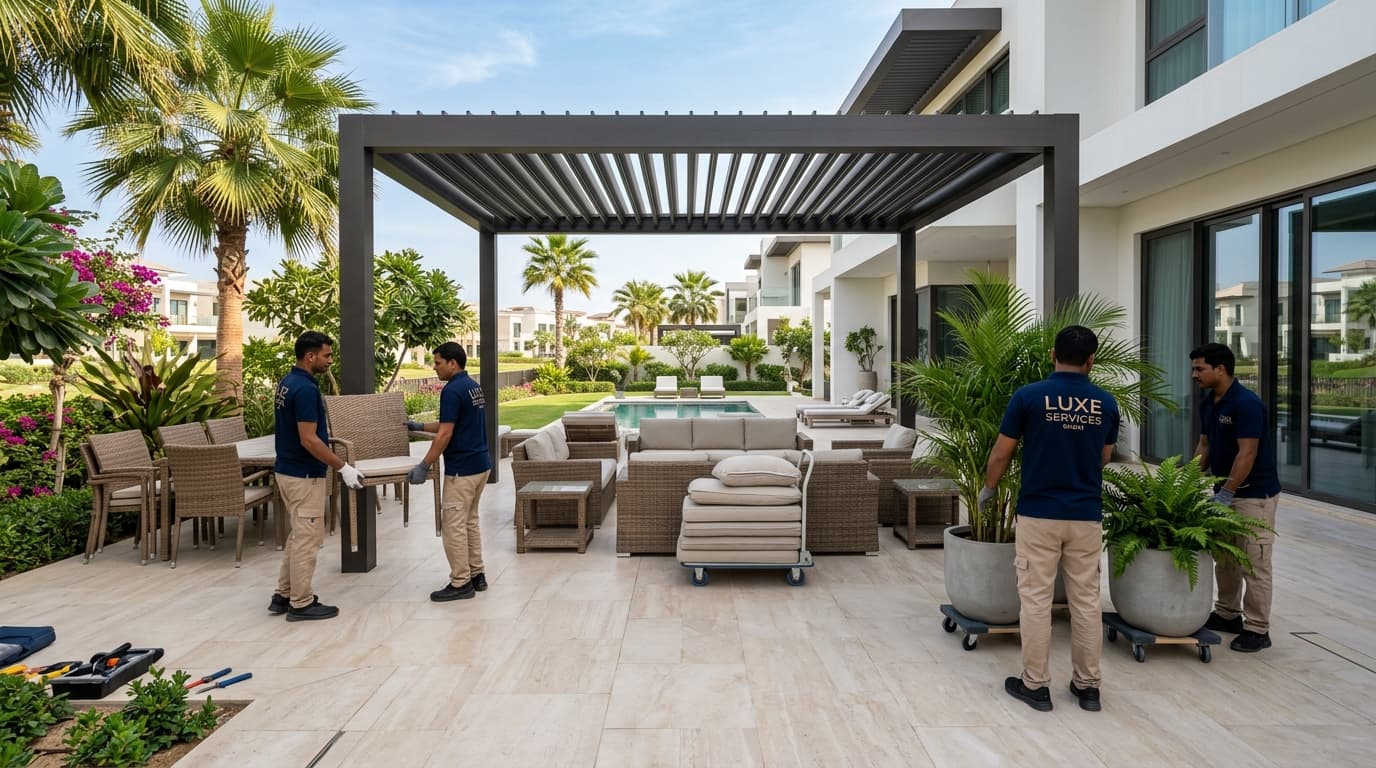
Trolleys and a clear route out matter more than crew size when a terrace set has to cross paving and a garden gate.
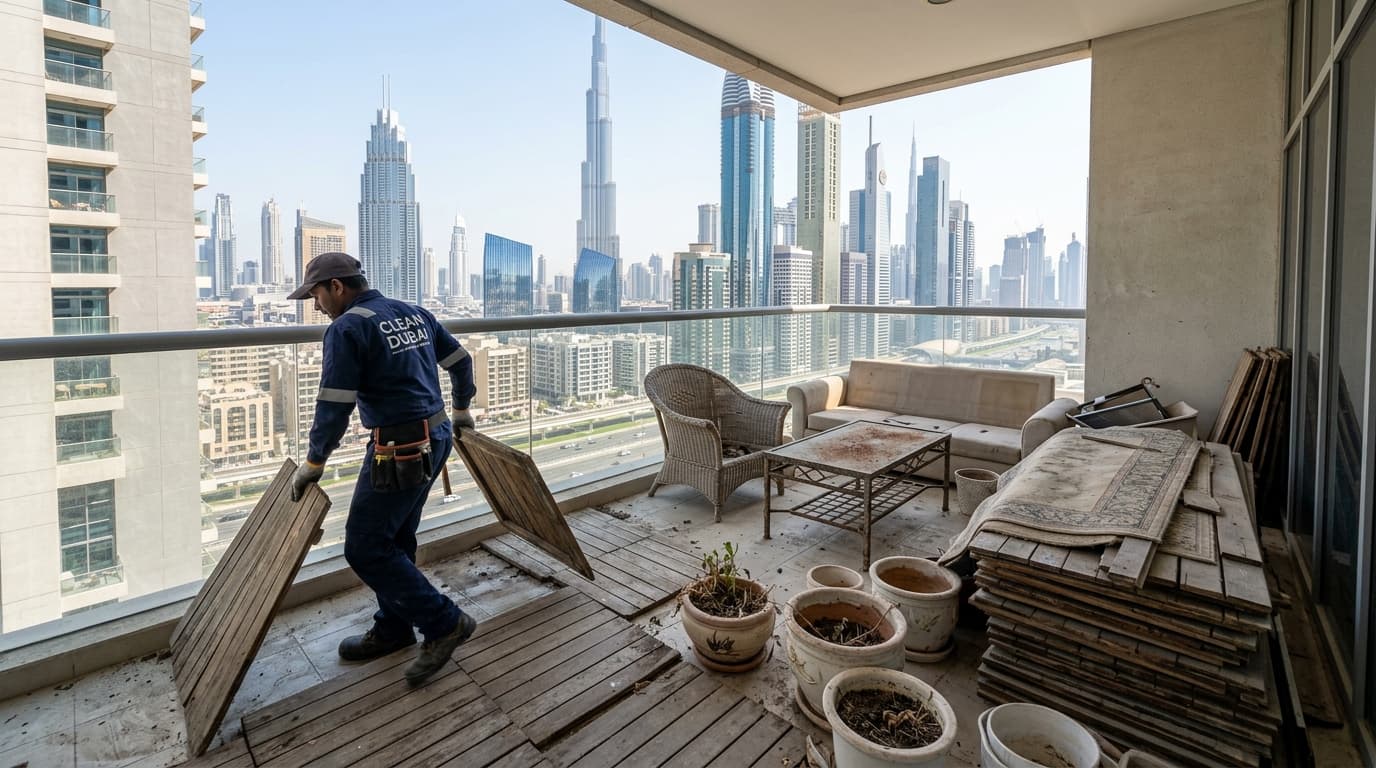
On a balcony, the route down is the constraint
Nothing goes over the rail. That should not need saying, but a sun lounger dropped from the fourteenth floor is a serious offence as well as an obvious danger, and building management will act on it immediately.
Everything therefore travels through the apartment, into the lift lobby and down the service lift, which means booking the lift with building management, laying protection across the floor, and accepting that a corner sofa unit may need the weave cut before it will pass a doorway. Sweep and bag the sand trapped under decking tiles and turf before anything moves through the flat, or it redistributes itself across a freshly cleaned apartment and a lift lobby you will hear about.
Check the house rules too. Many Dubai towers prohibit storing broken or unsightly items on a balcony, so the collapsed rattan sofa waiting for a decision is itself a notice risk. If you are at the end of a tenancy, clearing the balcony properly is part of getting the deposit back, not an optional extra.
Villa gardens, community notices and timing
In villa communities the equivalent problem is visibility. Broken furniture stacked down the side return or against a boundary wall is usually covered by community guidelines on external appearance, and a notice from the developer or owners association follows. It is worth clearing before it becomes correspondence.
Timing matters more than most people expect. Everyone in Dubai rediscovers their garden in the same fortnight in October, so collection slots and landscaping crews are busiest exactly when you want them. Book earlier than feels necessary, take a morning slot, and pair the furniture clearance with the green waste from the same tidy-up, since palm fronds, prunings and a dead patio set travel perfectly well in one load.
What buyers and charities will genuinely take
Be realistic about resale. A sun-perished set has no market here, and listing it produces messages rather than buyers. Good aluminium sets and sound hardwood do sell, particularly in the cooler months when people are furnishing terraces rather than emptying them. Registered charities accept outdoor furniture only when it is clean and structurally sound, and they consistently decline mildewed cushions and cracked plastic, for the same reasons they decline used mattresses.
If some of it is worth saving and some is not, split the pile before anyone arrives. Our comparison of selling against donating furniture covers where that line usually sits, and the donation directory lists which organisations collect larger items.
Book an outdoor furniture pickup
Photograph the terrace or balcony as it stands, from a distance rather than item by item, and mention the glass tops, how many parasol bases there are, whether it is a balcony or a garden, the floor and lift situation, and whether a gas cylinder is involved.
Dubai Junk Collection clears terraces, balconies and villa gardens with the metal separated for scrap, hardwood set aside for reuse where it is worth saving, and the rest disposed of legally. Message the photographs and you will get a fixed price back, with the awkward items priced in rather than discovered on the day.
Can I leave old patio furniture beside the community bin?
No. Bin points handle bagged household waste, not bulky items, and leaving a sun lounger beside one is treated as illegal dumping with a fine attached. It also blocks the collection vehicle. Arrange a bulky collection or book a private pickup instead, which takes the whole set in one visit.
Is it worth restoring teak outdoor furniture in Dubai?
Often, yes. Check whether the joints are still tight and the bolts sound. If they are, a sand and a coat of oil restores the surface, and a restored teak set holds real value here. If the joints have opened or the timber is splitting along the grain, it has reached the end and the wood goes to recovery.
What do I do with the gas cylinder from my old barbecue?
Return it to the supplier or an authorised exchange point. Disconnect it at the regulator, cap the valve, and transport it upright and secured. Clearance crews cannot take cylinders whether they are full or empty, so an unremoved cylinder will simply mean the barbecue is left behind on the day.
Will a crew take artificial grass and decking tiles as well?
Yes, and they are worth mentioning when you request the quote because of weight. Balcony turf and interlocking deck panels trap a surprising quantity of sand, so a small terrace can produce several hundred kilos. Roll turf inward, tape the rolls, and stack tiles in bundles that one person can lift.
When is the best time of year to clear a Dubai balcony or garden?
Between October and March, and preferably in the morning. Paving, metal and glass reach temperatures in a summer afternoon that make carrying anything unsafe, and the work simply takes longer. If the clearance cannot wait, take the earliest slot available and keep the route out shaded where you can.
Planning a clearance in Dubai?
Send photos of what you need cleared on WhatsApp. Our team provides an instant, fixed upfront rate and handles elevator bookings and gate security smoothly.
Tags:#Outdoor Furniture Disposal#Balcony Clearance Dubai#Patio and Garden Clearance#Scrap Metal Routes
Dubai Junk Collection Editorial Team
Operations & Pricing Specialists
Specialists in residential and commercial clearances across Dubai since 2016. Committed to safe property handovers, compliant electronic waste disposal, and municipal green waste diversion.
 Ask a Question