Check the asset register and fit-out schedule because the timber cabinet, microphone, controls and installed AV may have different owners.
Have facilities or the AV contractor isolate power and data, then photograph and label every cable and module before anything is disconnected.
Keep reusable electronics protected and inventoried separately from the furniture carcass, and book the approved commercial-tower loading route in advance.
How do you dispose of an office lectern in Dubai?
To dispose of an office lectern in Dubai, verify ownership of the cabinet and every AV component, have facilities isolate power and data, then photograph, label and inventory each connection. Remove only maker-approved modules, protect microphones and controls separately, measure the cabinet against the service-lift route, and arrange reuse or licensed commercial collection.
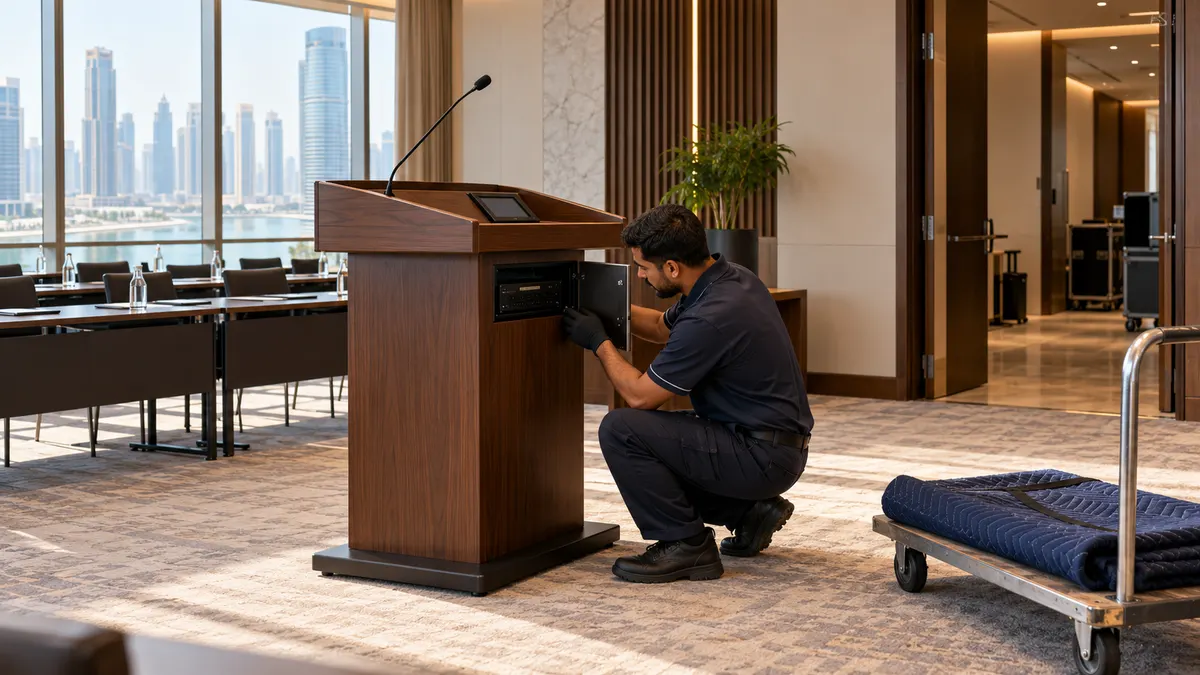
A plain wooden podium may be furniture; a modern lectern can be a compact equipment rack. Behind its access panel may sit a mixer, amplifier, control screen, power distribution unit, network cable and assisted-listening hardware. Treating all of that as one anonymous cabinet risks data, electrical safety and expensive leased equipment.
Separate ownership decisions before touching connections
Start with the company's asset register, room inventory and fit-out handover documents. The lectern shell may belong to the tenant while the microphone belongs to an events supplier and the control panel belongs to the landlord's meeting-room system. Photograph serial labels and ask IT, facilities and AV support to identify what must remain, return or transfer.
Check whether the cabinet is freestanding, bolted to a stage or connected through a floor box. A height-adjustable model may also contain a powered lift and pinch points. Do not roll or tilt it until anchors, concealed leads and levelling feet are understood. If the room is still operating, schedule disconnection after the final event and before the clearance crew's access window.
Isolate, map and protect the AV package
Facilities or the appointed AV contractor should shut down the system, isolate mains power and confirm which network and audio leads can be unplugged. Photograph both ends before labelling them. Legrand's lectern documentation shows that powered models may combine a fused AC inlet, power supply, mixer, amplifier, microphones and internal ribbon cables—useful evidence that the cabinet should not be treated as empty joinery.
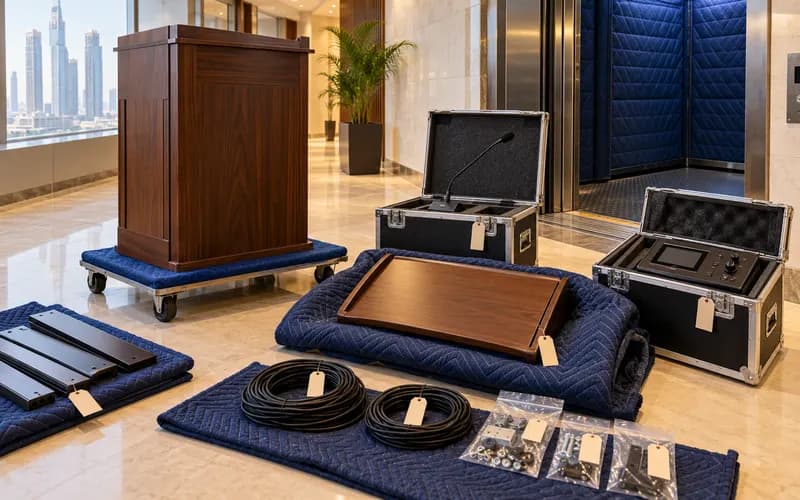
Remove accessories only in the manufacturer's sequence. Place the gooseneck microphone, touch panel, reading light and loose shelves in fitted padding; cap delicate connectors and coil cables without tight bends. Keep an inventory against each crate. Never cut an unidentified cable flush with the floor or leave a removed control screen loose inside the cabinet for transport.
A switched-off lectern may still be connected
A dark screen does not prove the cabinet is isolated. Floor-box feeds, power distribution and network equipment can remain live or shared. Facilities or the AV contractor should release the system before the clearance crew moves it.
Inventory electronics separately from the cabinet, protect connectors and keep every labelled cable with the correct module.
Plan the commercial route and the correct recovery stream
Measure the cabinet at its widest fixed point and include padding, base plates and handles. Confirm meeting-room doors, stage ramps, corridor turns, service-lift limits and loading-bay hours. Business Bay and DIFC towers commonly require contractor registration, security access and a reserved lift; a last-minute trolley through the public lobby is unlikely to be accepted.
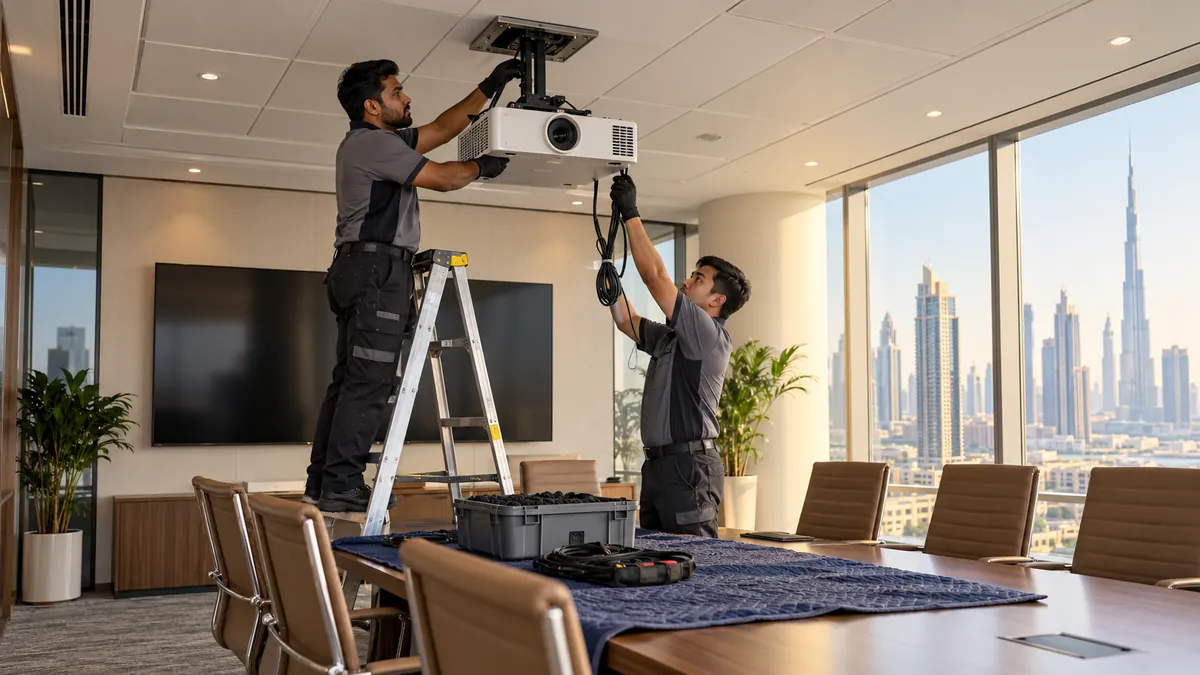
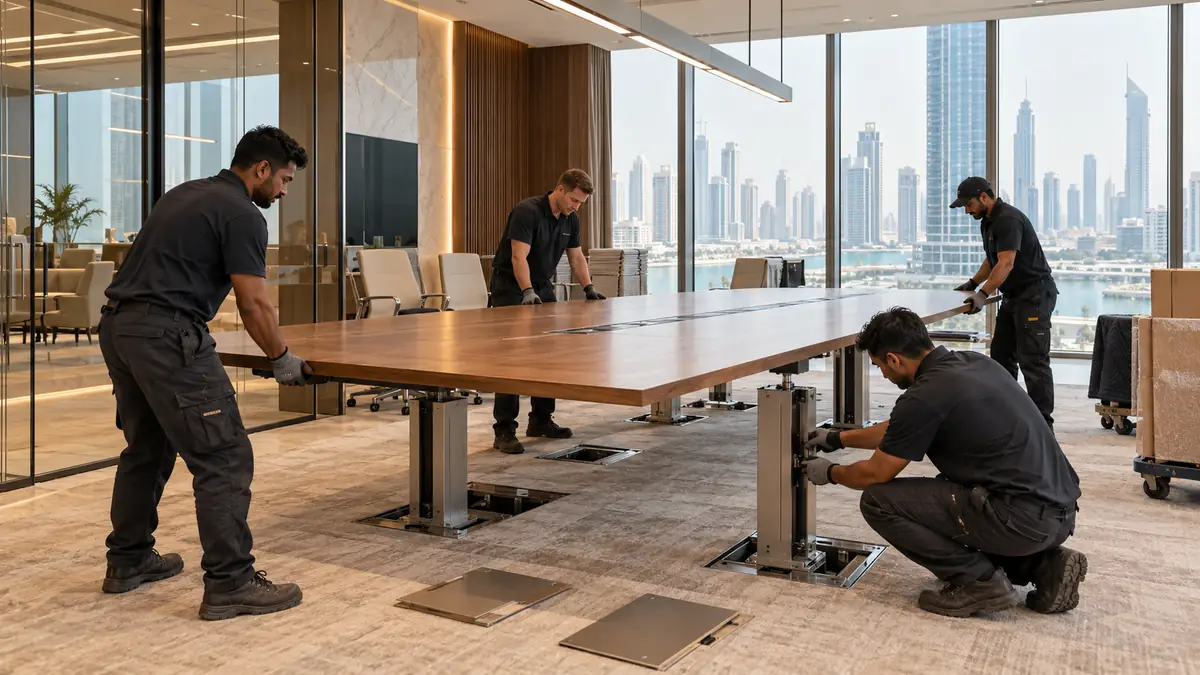
A complete working lectern is easiest to reuse when its keys, shelves, microphone and cable map travel with it. Failed AV components should follow an electronics route, while the empty timber or metal cabinet follows office-furniture recovery. Our office junk removal service can coordinate the physical clearance in areas such as Business Bay. Related guides cover projector retirement, conference-table removal and server-rack clearance.
Can a lectern be removed with its AV equipment still installed?
Only after the AV contractor has confirmed the equipment is isolated, owned by the client and safe to travel in place. Loose modules and microphones usually need separate padding. Heavy rack equipment can also change the cabinet's centre of gravity, so disclose the internal inventory before moving it.
Who should disconnect a powered office lectern?
The organisation's facilities, IT or appointed AV contractor should identify and isolate mains, network, audio and control connections. A clearance crew can move a released cabinet and packed modules, but it should not open live floor boxes, cut unknown cables or decide which integrated system belongs to the landlord.
Can an old lectern be donated to a school or community venue?
Yes, if it is stable, complete and honestly documented. The recipient needs dimensions, weight, keys, shelves, electrical rating and a list of working AV components. Remove corporate data and configuration credentials, and confirm that the recipient can install and test powered equipment safely.
What information helps quote lectern removal?
Send front, rear and open-compartment photographs, dimensions, weight estimate, fixing method and an inventory of screens, microphones, rack units and cables. Include the office floor, stage steps, service-lift and loading-bay rules, approved work hours and whether an AV contractor will attend the disconnection.
Planning a clearance in Dubai?
Send photos of what you need cleared on WhatsApp. Our team provides an instant, fixed upfront rate and handles elevator bookings and gate security smoothly.
Specialists in residential and commercial clearances across Dubai since 2016. Committed to safe property handovers, compliant electronic waste disposal, and municipal green waste diversion.
 Ask a Question