How to Dispose of an Electric Heater in Dubai: Oil-Filled Radiators, Ceramic Units and E-Waste
Identify whether your heater is a sealed oil-filled radiator or a dry ceramic fan unit, check for scorched plugs, keep thermal oil intact, and route it safely as appliance e-waste.
Oil-filled finned radiators contain sealed diathermic thermal oil that must never be punctured, drained at home, or crushed in general waste compactors.
Dry ceramic, halogen, and convector fan heaters contain no liquids and go directly through small-appliance e-waste collection once cooled and unplugged.
Inspect the UK 3-pin plug and power cord for heat discolouration or melted insulation before offering any working heater for resale or donation.
How do you dispose of an electric heater in Dubai?
To dispose of an electric heater in Dubai, unplug it, let it cool completely, and identify whether it is a sealed oil-filled radiator or a dry ceramic fan heater. Never put either type in household bins; route dry units through e-waste recycling and keep oil-filled radiators upright and sealed for specialist appliance collection.
In Dubai, portable heaters are often bought for a few chilly weeks in January across tiled villas, then pushed to the back of a storeroom until a move-out or spring clear-out. Knowing what is inside the casing decides whether it can be resold safely or needs controlled recycling.
Identify oil-filled radiators versus dry ceramic or fan heaters
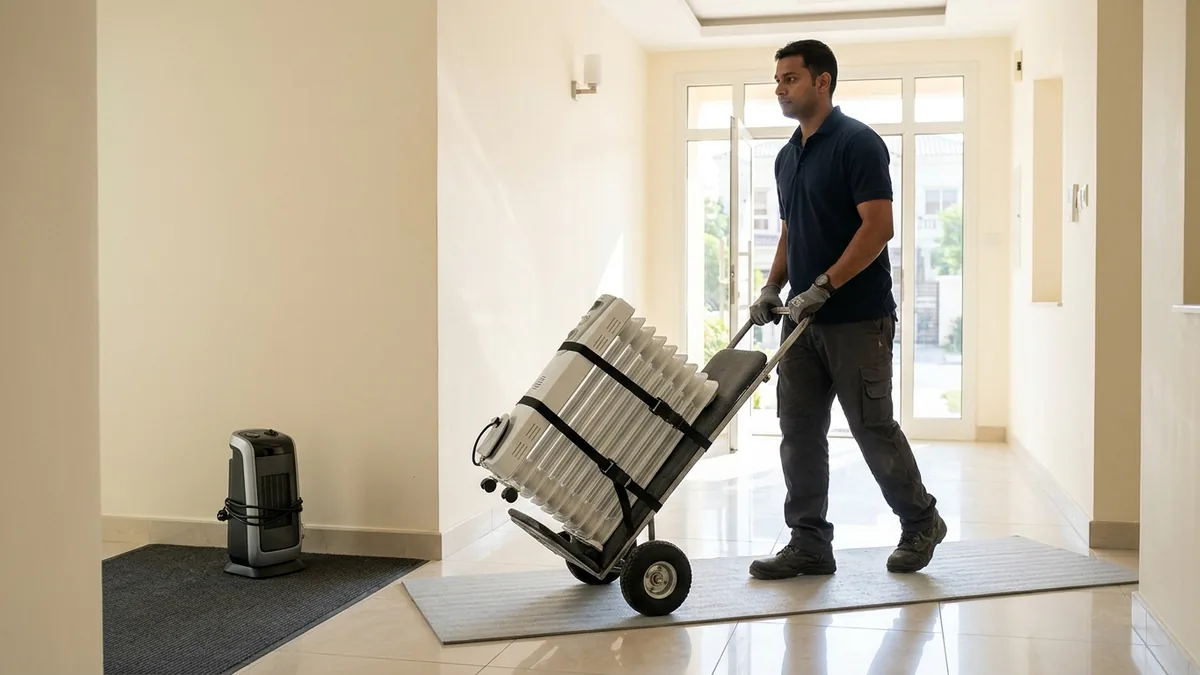
Heavy finned column radiators on castor wheels are filled with sealed mineral thermal oil that transfers heat silently through the steel fins. That oil is permanently sealed at the factory and should never be opened, drained into a sink, or punctured.
Lightweight tower heaters, ceramic PTC units, halogen bars, and compact fan heaters contain no fluid—only heating elements, a fan motor, thermal cut-off switches, and circuit boards. Both types are classed as electrical waste under UAE waste regulations and must stay out of municipal rubbish chutes.
Never bin or crush an oil-filled radiator
If an oil-filled radiator is dropped into a building compactor or general skip, the steel fins can split and leak thermal oil onto floors or into mixed waste. Always transport it upright and intact.
Check cords, thermostats and oil seals before rehoming
Before giving away or selling a heater that still turns on, inspect the moulded plug pins and the flex where it enters the body. Because heaters draw high continuous current, worn sockets or cheap extension leads often leave brown scorch marks or stiff, brittle insulation on the cord—any unit with heat damage should be retired immediately rather than passed on.
Check the bottom seam of an oil-filled radiator for sticky residue or a faint chemical smell, which signals a pinhole leak. Coil the power cord neatly around the cord-wrap bracket or secure it to the top handle, and keep the castor wheels intact so it rolls smoothly without scratching marble or parquet floors.
Keeping the power cord secured and separating oil-filled radiators from dry ceramic units prevents leaks and trip hazards during collection.
Schedule safe appliance and e-waste collection
Working, undamaged heaters are easiest to pass on between November and February; out of season, most households prefer a single-trip clearance alongside other stored appliances. Never leave heaters in villa alleyways or apartment garbage rooms where staff may not handle electrical items.
Do I need to drain the oil out of an oil-filled radiator before disposal?
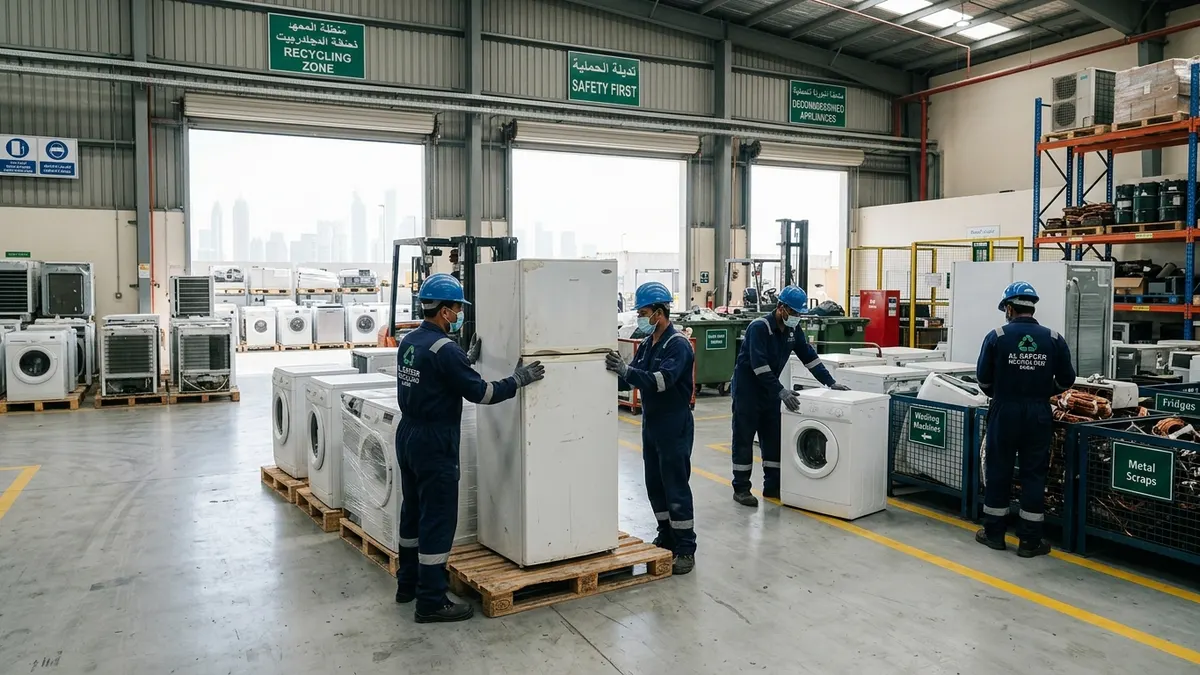
No. Oil-filled radiators are factory-sealed units and must not be drilled or drained at home. Licensed appliance recyclers extract and process the thermal oil safely before recovering the steel fins and copper wiring.
Can I throw a small ceramic fan heater in the general rubbish bin?
No. Even compact desk or bathroom fan heaters count as electronic waste (WEEE) because they contain heating coils, motors, and thermal switches. They should go to an e-waste drop-off or an appliance collection crew.
What if my oil-filled radiator is leaking oil onto the floor?
Unplug it at the wall, stand it upright inside a heavy plastic tray or doubled rubble bag lined with cardboard or absorbent paper, and wipe any floor residue with degreaser before moving it.
Is it safe to donate an older electric heater in Dubai?
Only if it has a clean, undamaged UK 3-pin plug, no scorch marks or frayed flex, a working tip-over safety switch, and no sign of oil seepage on finned models.
Planning a clearance in Dubai?
Send photos of what you need cleared on WhatsApp. Our team provides an instant, fixed upfront rate and handles elevator bookings and gate security smoothly.
Specialists in residential and commercial clearances across Dubai since 2016. Committed to safe property handovers, compliant electronic waste disposal, and municipal green waste diversion.
 Ask a Question