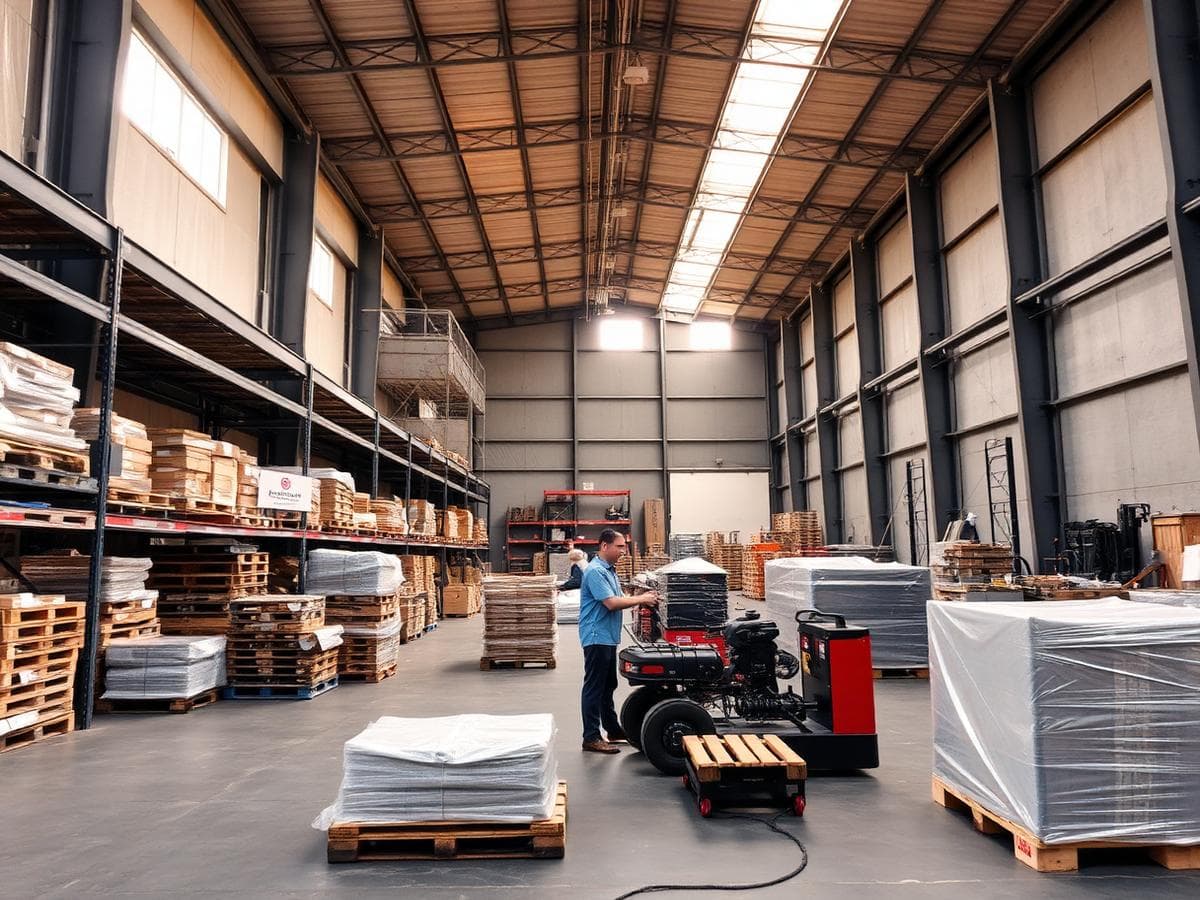
How to Clear a Warehouse in Dubai: Racking, Stock and Unit Handover
A warehouse clearance is limited by the loading bay, not by truck size. Here is the order to strip an industrial unit in Al Quoz, DIP or Jebel Ali without losing the deposit.
A warehouse clearance is paced by the loading bay, not by headcount. One shutter and one forklift set the speed, so sequence matters more than crew size.
Read the reinstatement clause first. Most industrial leases expect the unit back as handed over, which covers racking anchors, mezzanine, partitions and signage as well as stock.
Keep one forklift, one operator and the racking spanners on site until the steel is down. Hiring equipment back for the final week costs more than holding it.
Steel racking, machinery and cable carry weight-based scrap value that can offset part of the job, but only if it is separated before it is mixed with general waste.
Branded, expired or customer-owned stock is a paperwork job before it is a disposal job. Agree what evidence is needed before anything is loaded.
How do you clear a warehouse in Dubai?
Clear a warehouse in four passes: stock first, then loose equipment and packaging, then racking and mezzanine, then fixings and floor. Keep the forklift until the steel is down, hold the loading bay for the trucks, and separate scrap metal, timber and cardboard before anything gets mixed.
Industrial units across Al Quoz, Ras Al Khor, Al Qusais, Dubai Investments Park and the Jebel Ali free zones are variations on the same shape: a roller shutter or dock, a concrete slab, high bays, and a mezzanine office tucked in one corner. Every clearance looks like a volume problem at first and turns out to be a sequencing problem. Twelve people cannot help you if there is one shutter and one truck standing under it.
Start with the reinstatement clause, not the stock
The lease, not the amount of junk, defines the finish line. Industrial tenancies in Dubai generally require the unit returned in the condition it was handed over, and the landlord or the free zone authority runs an inspection before a deposit is released or a lease is formally closed. Ask for that handover checklist in writing at least a month out, because it is the only reliable list of what counts as yours to undo.
If you still have the inbound condition report and photographs from the day you took the unit, put them in the handover file now. Slab stains, shutter dents and existing anchor holes are the usual arguments, and a dated photograph settles them in a sentence.
Ask for the checklist early
Request the handover or reinstatement checklist from the landlord's facilities team or the free zone authority before your final month. Finding out at inspection that the mezzanine had to come out is a two-week problem discovered on the wrong day.
Mezzanine platforms, staircases and any structure added after handover.
Racking anchor bolts, and the holes left in the slab once they are out.
Internal partitions, the office fit-out and any added flooring.
Signage, vinyl and branding on the shutter, the facade and the internal walls.
Air-conditioning, extraction or compressed-air lines added for the operation.
Additional power drops, sockets and machine isolators fitted for equipment.
Anything stored outside the unit: pallets, drums, cages, a shade structure in the yard.
The bay sets the pace, so work towards it
Before anything moves, mark staging lanes on the slab with tape or spare pallets: one for scrap metal, one for timber and pallets, one for cardboard and film, one for genuine waste, and one for whatever is leaving with the business. Sorting as you go is the difference between four clean loads and one expensive mixed one.
Keep the fire lane and the approach to the shutter clear at all times. A stack that creeps in front of the dock adds a carry to every single item that follows, and on a 15,000 square foot unit that is measured in hours. Where several units share a turning area, agree an arrival window with the neighbours: two trucks reversing into the same service road is the most common reason a clearance day starts an hour late.
Stock is the only part of the job with real decisions in it
Everything else is logistics. Stock is where money, contracts and liability sit, so it is worth an afternoon of sorting before a single pallet is touched. Split what remains into five piles and deal with each on its own terms.
Destruction evidence is agreed before the truck arrives
If a brand owner, insurer or auditor will need proof that stock was destroyed rather than resold, arrange the witnessing and documentation in advance. Nobody can issue meaningful evidence for a load that has already left the unit.
Saleable stock: clear it through your own channels or a bulk buyer while you still have the racking to store it on.
Returnable stock: supplier returns almost always have a window and a form. Check both before the last month.
Customer-owned or consignment goods: not yours to dispose of. Get written instructions and a signed transfer note.
Branded goods: many brands and distributors require certified destruction rather than resale, and want evidence of it.
Expired or damaged goods: food, cosmetics and regulated products have their own handling rules and cannot ride out with general waste.
Racking comes down from the top, level by level
Empty every beam level before touching the structure, working from the highest level down. Beams are held by safety pins or clips that have to come out by hand, and an upright still carrying a loaded level at the top is the single most dangerous thing in an industrial clearance.
Uprights come last, with two people to each frame and nobody climbing the structure. Once the frames are out, the anchor bolts remain: cut or grind them flush with the slab and fill the holes rather than leaving studs standing. Protruding anchors are a trip hazard for the next tenant and the first thing a handover inspector points at.
How a warehouse strip-out separates
Material
Where it comes from
Route
Watch for
Steel racking and shelving
Beams, uprights, mesh decking, cantilever arms
Scrap metal recovery, weighed
Value follows weight, so keep it clean and out of mixed loads
Machinery, compressors and cable
Production lines, compressors, cable drums, conduit
Scrap or resale once drained
Oil, coolant and hydraulic fluid come out first and go to a specialist route
Pallets and timber crates
Stock movement and one-way export crates
Reuse while sound, wood recovery when broken
Sound pallets hold resale value; broken ones hide nails and steel banding
Cardboard, shrink wrap and strapping
Packing bench and inbound goods
Paper and plastic recovery, baled or bagged
Keep it dry and separate; wet or contaminated material gets downgraded
Mezzanine, partitions and office fit-out
Tenant-installed structure
Construction and demolition route
The part most often missing from a clearance quote
Contaminated and general waste
Sweepings, oil-soaked rags, damaged goods
Licensed disposal facility
Contaminated material cannot travel with recyclables
Materials separated at the unit stay separated at the yard, which is what keeps scrap value and recycling rates intact.
The equipment that leaves before you need it
Here is the mistake that turns a three-day clearance into a week. The forklift, the pallet trucks, the scissor lift and the spanner sets are the valuable, easily moved assets, so they get sold, returned to the lease company or sent ahead to the new unit first. The racking then has to come down by hand, at height, with no way to move a tonne of steel across the slab.
Hold one forklift and a licensed operator until the last beam is on the truck. The same applies to power. If the utility account is closed the week before, you are stripping a high-bay unit with no lighting, no power for grinders and no air-conditioning in the office, working to whatever daylight comes through the open shutter. Time the disconnection after the clearance, not before it.
The corner nobody costs into the quote
Every unit has one: broken pallets, empty drums, a shelf of part-used oils and paints, aerosols, an old fire extinguisher, spent batteries, and the forklift traction battery that was replaced two years ago and never left. None of it is difficult, but none of it belongs in a general load either.
Lead-acid traction batteries are heavy, contain acid and are handled as a specialist item rather than as scrap steel. Oils, solvents and part-used chemicals follow the same logic as a household chemical cupboard, only in larger containers, and our guide to hazardous household waste explains how that separation works. Flag all of it when you request the quote so the right containers arrive on the first visit.
Clear the mezzanine office in the same window
Desks, chairs, the server cabinet, the printer and years of filing all sit above the slab and have to come down the same staircase. Route records for secure shredding and wipe or destroy drives before the machines leave, the same way you would for laptops.
Book an industrial unit clearance
Send photographs from the shutter looking in, from the back of the unit looking out, and of the mezzanine and any remaining stock. With those, plus the unit's square footage, the number and height of racking bays, whether a forklift stays on site and until when, and the access hours for the estate or free zone, a fixed quote is straightforward.
Dubai Junk Collection clears industrial units across Al Quoz, Ras Al Khor, Dubai Investments Park and the Jebel Ali area, with scrap value quoted separately from the clearance fee so you can see both numbers. Disposal goes to licensed facilities, and the documentation goes into your handover file rather than disappearing with the truck.
How long does it take to clear a warehouse in Dubai?
A small unit of two to three thousand square feet with light shelving is usually a one or two day job. Multi-level racking, a mezzanine office and remaining stock push it to a week or more, and the limiting factor is almost always how many truck loads the single loading bay can turn around each day.
Can I leave the racking for the next tenant?
Only with written agreement from the landlord, and ideally from the incoming tenant too. Without it, racking is treated as a tenant alteration that should be removed, and the anchor bolts and slab holes come with it. Get any agreement in the handover file rather than relying on a conversation.
Is old warehouse racking worth anything as scrap?
Steel racking, machinery and cable are valued by weight, so a full bay system can offset a meaningful part of the clearance cost. Ask for the scrap figure to be quoted separately rather than folded into a headline discount, and keep the metal out of mixed loads so it can actually be weighed.
Can a warehouse clearance run outside normal working hours?
Often yes, since industrial estates rarely have the noise restrictions that towers do. The constraints are gate hours, security passes and whether the free zone authority permits after-hours movements. Confirm access with the estate management before scheduling, and name the authorised person who will hold keys and sign off.
What happens to leftover stock that cannot be sold?
It depends on what it is. Ordinary unsold goods can often be donated or recycled by material. Branded, expired or regulated stock usually needs certified destruction with documentation. Decide the route before collection day, because once a mixed load has left the unit, no one can issue evidence about what was in it.
Planning a clearance in Dubai?
Send photos of what you need cleared on WhatsApp. Our team provides an instant, fixed upfront rate and handles elevator bookings and gate security smoothly.
Tags:#Warehouse Clearance Dubai#Racking Removal#Industrial Unit Handover#Scrap and Pallet Disposal
Dubai Junk Collection Editorial Team
Operations & Pricing Specialists
Specialists in residential and commercial clearances across Dubai since 2016. Committed to safe property handovers, compliant electronic waste disposal, and municipal green waste diversion.
 Ask a Question