DIY Junk Removal vs Hiring a Crew in Dubai: A Practical Cost Test
The cheapest-looking option is not always the lowest-effort one. Compare access, vehicle space, lifting, repeat trips, and your deadline before deciding to self-haul.
DIY is usually sensible for a few light, clean items when you already know the accepted destination and can transport them in one safe trip.
Count vehicle hire, fuel, helpers, tools, access preparation, travel, unloading, and repeat journeys rather than comparing a crew quote with zero.
Bulky furniture, dense material, stairs, dismantling, mixed loads, and fixed handover windows move the decision toward a trained removal crew.
Building and community access rules apply whichever method you choose, so confirm the vehicle route, loading area, lift booking, and permitted hours first.
A useful professional quote states the load, labour, dismantling, access assumptions, transport, and any exclusions in writing before the collection begins.
DIY junk removal vs hiring in Dubai: choose by job shape
For DIY junk removal vs hiring in Dubai, self-haul is the practical choice when the load is small, light, easy to carry, accepted at a destination you have confirmed, and safe to transport in one journey. Hire a crew when the job includes bulky furniture, dismantling, stairs, a tower service route, dense or mixed material, several trips, or a non-negotiable move-out deadline.
The decision is not a test of whether you are willing to work. It is a comparison of the complete job: preparation inside the property, movement through the building, vehicle capacity, transport, unloading, and the chance that the receiving location refuses part of the load. If one missing step sends you back across the city, the apparent saving changes quickly.
Start with the destination
Before carrying anything downstairs, confirm where each material can go, its opening or appointment requirements, and whether your vehicle and item type will be accepted.
Score the job before choosing
Use the following test for the load you actually have, not the first two bags you can see. Open storerooms, cupboards, the balcony, and any disassembly areas before judging volume. A compact pile of doors, shelves, and bagged contents can still require more vehicle space and handling than expected.
DIY or crew decision test
Job factor
DIY is realistic when...
A crew is stronger when...
Load size
Everything fits safely in one planned trip
The load is uncertain or needs repeat trips
Item type
Items are light, stable, and easy to contain
Furniture is bulky, dense, sharp, or awkward
Access
Direct parking and a clear, permitted route
Service lift, stairs, long carries, or booked access
Preparation
No specialist dismantling or handling is needed
Tools, protection, trolleys, or a multi-person lift are needed
Destination
Acceptance and unloading method are confirmed
Different materials require sorting and separate routes
Deadline
You can recover from delay or rejection
Keys, delivery, contractor, or handover fixes the finish time
Calculate the real DIY cost
DIY cost includes every resource required to complete the loop. Add the suitable vehicle, fuel and road charges, protective blankets or straps, trolley or tools, help from another person, loading time, drive time, unloading time, and any second journey. Then include the value of the day you are giving up and the cost of recovering from damage or a missed property appointment.
Do not overload a car or leave the boot, doors, or load unsecured to force a one-trip result. A sofa that fits inside a lift may not fit through the vehicle opening, and dismantled wardrobe panels still need stable support. If the item blocks visibility, cannot be secured, or exceeds the vehicle's limits, change the transport plan.
Vehicle large enough for the longest and widest item, with safe tie-down points.
A second capable person for awkward items; never rely on a passer-by at the loading area.
Blankets, corner protection, gloves, closed footwear, basic tools, and a suitable trolley.
A confirmed destination for furniture, recyclables, general material, and any restricted items.
Enough time for sorting, building access, unloading, and a rejected-item fallback.
Access and lifting decide more jobs than distance
A short drive does not make a difficult carry easy. Measure the item, doors, turns, lift, loading-bay height, and vehicle opening. Ask building management whether residents may move bulky items themselves, whether a service lift must be reserved, and what identification or parking information security needs. Follow the current rules issued for your building or community.
Keep common routes open until the vehicle and helpers are ready. Protect finished floors and lift walls, remove loose shelves, tape doors closed, and bag small parts. Stop if an item becomes unstable or needs you to twist, lift above control height, or carry on stairs without enough people and equipment.
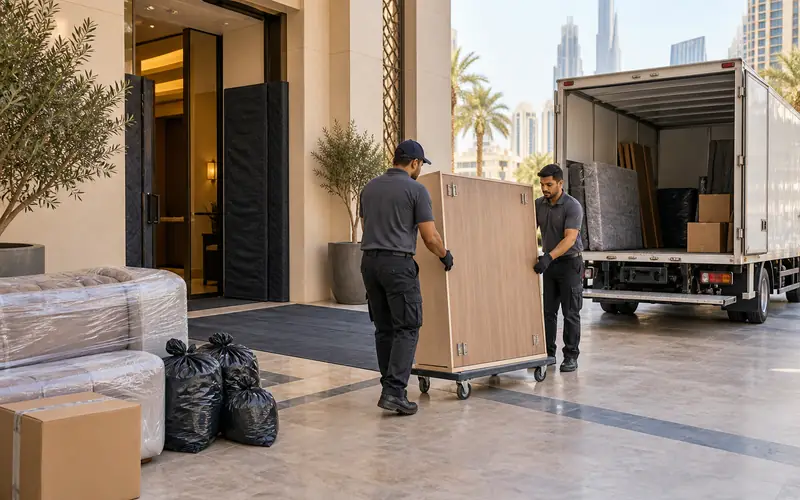
Bulky loads need the right vehicle, a protected route, and equipment sized for the item—not improvised carrying.
What a complete crew quote should cover
A professional quote should be specific enough that both sides understand the job. Send photos or a continuous video, list the large items, show filled bags or boxes, and state the property type, floor, lift, parking distance, community, and preferred date. Ask whether dismantling, loading, transport, normal sorting, and the final sweep are included.
Clarify exclusions before booking, especially paint, chemicals, gas cylinders, medical sharps, unknown liquids, active renovation debris, and other materials that may need a specialist route. Also ask what happens if the actual load is materially larger than the photos. A written assumption is more useful than a low number that changes after everything is in the corridor.
Use a simple break-even rule
Choose DIY if you can name the destination, complete the load safely in one journey, use a suitable vehicle you already have, and finish with comfortable time to spare. Choose a crew if you must rent or borrow several resources, need dismantling or multiple carriers, face uncertain volume, or cannot absorb a failed trip. The break-even point is often coordination, not kilometres.
For a professional comparison, send Dubai Junk Collection the full load and access details on WhatsApp and ask for a fixed written scope. Compare that scope with your complete self-haul checklist. If DIY still wins clearly, you have a sound plan; if it depends on perfect timing and free help, book the option that protects the deadline.
Frequently Asked Questions
Can household junk and renovation debris travel in the same load?
Do not assume so. Tile, concrete, gypsum, sharp metal, paint, solvents, and unknown site materials may require different containment, transport, and receiving routes from ordinary household contents. Photograph them separately and ask the destination or collector to confirm acceptance before mixing anything or beginning the carry-out.
Do I need to weigh bags before a DIY trip?
Exact weighing is rarely the first step, but every bag must remain manageable, stable, and within your vehicle's payload. Dense rubble, books, soil, and tiles become heavy before a bag looks full. Split dense contents into smaller containers and check the vehicle manual rather than estimating from boot space alone.
What if my building will not admit the collection vehicle?
Pause the collection and speak with management or security rather than unloading or staging items outside. Ask what vehicle details, identification, access permit, loading-bay booking, or alternative entrance they require. Rebook only after the route is confirmed, and keep all items inside the property until the vehicle is admitted.
Can a removal crew keep reusable items separate from general junk?
Ask before booking and identify those items in the photos. Keep clean, functional pieces dry, complete, and clearly separated from broken or contaminated material. The available reuse route depends on condition and current recipient capacity, so request a realistic assessment rather than an unsupported promise that every item will be donated.
Planning a clearance in Dubai?
Send photos of what you need cleared on WhatsApp. Our team provides an instant, fixed upfront rate and handles elevator bookings and gate security smoothly.
Tags:#DIY Junk Removal vs Hiring Dubai#Skip Hire Dubai Alternatives#Junk Removal Service Dubai#Bulky Item Removal Dubai#Junk Removal Questions Dubai
Dubai Junk Collection Editorial Team
Operations & Pricing Specialists
Specialists in residential and commercial clearances across Dubai since 2016. Committed to safe property handovers, compliant electronic waste disposal, and municipal green waste diversion.
 Ask a Question